The third edition reflected the continued growth and the increasing sophistication of the Kingdom’s warehousing and logistics market
On behalf of HE the Minister of Transport and Logistic Services, Eng. Saleh Al‑Jasser, HE the Vice Minister of Transport and Logistic Services, Dr. Rumaih Bin Mohammed Al-Rumaih, recently inaugurated the 3rd edition of the three-day (8 to 10 September) Saudi Warehousing & Logistics Expo at the Riyadh International Convention & Exhibition Center.
“As we witness the progression in our industrial and logistics transformation, this expo serves as an important trade exhibition to strengthen collaboration, accelerate sectoral development and advance the objectives of the National Transport and Logistics Strategy in support of the ambitions of Saudi Vision 2030,” stressed Dr. Al-Rumaih at the inaugural ceremony.
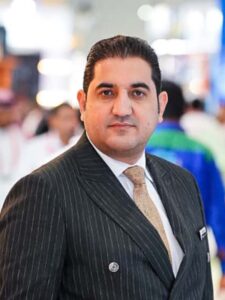
LogisticsGulf.com conducted an exclusive interview with Mutaz Al Mazari, Portfolio Director, dmg events, following the conclusion of the event.
LogisticsGulf.com (LG): Saudi Warehousing & Logistics Expo 2026 has just concluded. What is your overall assessment of this event and how do this year’s metrics stack up in terms of exhibitor and visitor numbers/footfall and other parameters?
Mutaz Al Mazari (MAM): The third edition reflected the continued growth and the increasing sophistication of Saudi Arabia’s warehousing and logistics market. We welcomed more than 350 exhibitors from over 25 countries, showcasing more than 4,000 products and services, with more than 18,000 industry professionals attending over the three days.
What stood out most was the level of commercial engagement. The exhibition floor remained busy throughout the event, with exhibitors reporting strong conversations with buyers and companies bringing active projects and specific requirements to the exhibition.
We also saw particularly strong participation from international companies looking to understand the Saudi Arabian market, establish relationships and explore opportunities in the Kingdom.
The commercial activity translated into new partnerships, with 17 MoUs signed between companies across the warehousing and logistics ecosystem. The agreements covered a broad range of areas, including warehouse infrastructure, automation, logistics real estate, material handling, e-commerce fulfilment, transport and manufacturing localization.
For us, that breadth was an important indicator of how the market is developing. The opportunity is extending across the logistics value chain and businesses are increasingly looking at how different parts of that ecosystem can work together.
LG: What were some standout conversations at the exhibition in the light of Saudi Arabia Vision 2030 and its national ambitions to massively further develop its logistics and supply chain infrastructure?
MAM: A strong theme across the exhibition was the move towards a more connected logistics network. Conversations were increasingly focused on how infrastructure, warehousing, transport, technology and distribution can work together to support the Kingdom’s wider economic and logistics ambitions.
We saw this reflected in the solutions being presented and in the projects being discussed. Automation and digital technologies featured strongly, alongside warehouse infrastructure, material handling and logistics services. There was also clear interest in the infrastructure needed to support e-commerce and increasingly sophisticated fulfilment requirements.
The Saudi Warehousing & Logistics Summit added another layer to these discussions. Eng. Rajih Al-Shareif from the Ministry of Transport and Logistic Services outlined the Kingdom’s logistics zones masterplan, including 59 logistics zones, of which 24 are currently activated.
He also discussed specialized logistics zones at city entrances and micro-hubs being developed to support faster e-commerce fulfilment and more efficient last-mile operations.
The conversations we heard at the exhibition showed that businesses are looking closely at these developments and considering where they can contribute, invest and build partnerships as the logistics network continues to expand.
LG: How was Saudi Warehousing & Logistics Expo 2026 able to cohere and integrate government, logistics providers, technology companies, supply chain decision-makers and other stakeholders on a common platform?
MAM: The structure of the event was important. The exhibition brought together companies across the logistics value chain, while the Saudi Warehousing & Logistics Summit and Hala Chats created opportunities to discuss the strategic and operational issues affecting the market.
Having these groups in the same environment allowed conversations to move between policy, investment, technology and practical business requirements. Government representatives could outline infrastructure priorities, companies could present solutions and end users could discuss the requirements emerging from their operations.
We saw that interaction happening directly on the exhibition floor. International technology and logistics companies were meeting Saudi businesses to understand local requirements, while established operators were exploring new technologies and partnerships.
The 17 MoUs signed during the event also demonstrate how those conversations can develop into commercial relationships. The agreements ranged from automation and warehouse infrastructure to logistics real estate, integrated logistics services and manufacturing localization.
That is particularly relevant in a market such as Saudi Arabia, where the scale of infrastructure development means that different parts of the logistics ecosystem increasingly need to work together.
LG: How do you plan to grow SWLE 2027 to a bigger event?
MAM: As the event returns for its fourth edition in 2027, we are collaborating with Messe München to bring transport logistic Middle East, air cargo Middle East and project cargo Middle East alongside Saudi Warehousing & Logistics Expo.
This will broaden the conversation from warehousing and logistics into freight and air cargo, reflecting the interconnected nature of the sector. It also creates more opportunities for businesses across different parts of the supply chain to meet, identify partners and explore opportunities in the Kingdom.
The timing is particularly relevant as Saudi Arabia prepares for major developments such as Riyadh Expo 2030 and the FIFA World Cup 2034. These developments will create sophisticated requirements across transport, warehousing, freight and supply chain management.
Our focus will therefore be on continuing to grow the event aligned with the market, bringing together the companies, expertise and solutions that respond to the Kingdom’s evolving requirements.
LG: What appetite is there among multiple logistics and supply chain and allied service providers to expand their offering in the Kingdom?
MAM: The appetite was clear from the level of international participation and the conversations taking place throughout the event. We saw companies using the exhibition to understand the Saudi market, assess local requirements, meet potential customers and explore opportunities to establish or expand their presence.
SSI Schaefer was a good example. Participating for the first time, the company was looking to understand the local market and had conversations with businesses with real projects. Its team also received requests for follow-up visits, demonstrating the level of interest in solutions that can address specific requirements in the Kingdom.
The MoUs signed during the event provide further evidence of this activity. For example, Smartlog and Arabian Oud agreed to work together on warehouse automation to support B2B fulfilment and e-commerce, while Swisslog and Starlinks signed an MoU to explore collaboration in warehouse automation and intelligent logistics solutions. There were also agreements covering logistics real estate, warehouse infrastructure, vehicle storage and manufacturing localization.
What we are seeing is interest from companies across different parts of the value chain, with businesses looking at both immediate commercial opportunities and longer-term ways to participate in the Kingdom’s logistics development.
LG: What are the opportunities for potential companies to enter and/expand their operations in the Kingdom?
MAM: The opportunities span a broad section of the logistics value chain. The development of logistics zones, warehousing, transport infrastructure and e-commerce fulfilment is creating requirements for companies across automation, material handling, warehouse infrastructure, logistics services, technology and real estate.
There are also opportunities linked to localization. One of the agreements signed during the exhibition involved cooperation to localize manufacturing and provide automated storage solutions in the Saudi market, including Mobile Racking Systems and Vertical Warehouse Storage Systems. This reflects an opportunity for businesses to consider how they can contribute to the development of local supply chains alongside serving growing demand.
The market is also creating opportunities for specialized services. Agreements signed during the exhibition included integrated warehousing and transportation services, medical-sector warehousing, heavy-equipment storage and solutions supporting e-commerce operations.
For companies entering or expanding in the Kingdom, understanding the specific requirements of the Saudi market is an important part of that process. Events such as Saudi Warehousing & Logistics Expo give businesses an opportunity to have those conversations directly with customers, partners and other stakeholders operating in the market.
LG: What are the greater areas of interest to explore new and potential players in this domain to do business in the Kingdom?
MAM: One of the clearest areas of interest is the integration of physical infrastructure with technology. Businesses are looking at automation, data, visibility and intelligent warehouse systems alongside the underlying infrastructure needed to support growing volumes and more complex operations.
E-commerce fulfilment and last-mile logistics are also areas where we are seeing continued development. The Ministry’s plans for specialized logistics zones at city entrances and micro-hubs are examples of how the logistics network is evolving to respond to these requirements.
There is also considerable scope across logistics real estate, warehouse infrastructure, transport and material handling. The agreements signed at the Expo reflected this diversity, from a SAR 1.1bn agreement for the deployment of autonomous forklifts across the Kingdom to warehouse infrastructure partnerships, logistics real estate investment and e-commerce automation.
For new and potential players, the opportunity is therefore broader than any single logistics segment. The market is developing an increasingly connected ecosystem, creating space for companies that can bring relevant technology, infrastructure, services and expertise and work with Saudi businesses to address specific requirements.