Pantheon ACR is built to create a platform that allows artists to reach new audiences and provide powerful experiences
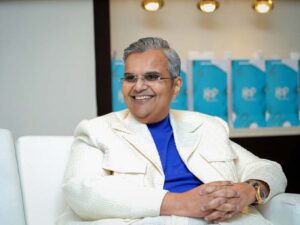
Kalpesh Kinariwala, Founder, Pantheon Art, Culture & Real Estate, was interviewed on the sidelines of the recent story narrator and raconteur Laksh Maheshwari’s performance in Dubai.
LogistocsGulf.com (LG): Pantheon has traditionally been known as a real estate business. Why expand into Art and Culture now?
Kalpesh Kinariwala (KK): Real estate gave Pantheon its foundation, but it was never going to define the full extent of our ambition.
Since launching in Dubai in 2016, we have built our reputation by making promises and delivering on them. That credibility now gives us the confidence to build in new industries. Pantheon ACR is the next chapter of that journey: a UAE-born group with three distinct verticals across Art, Culture and Real Estate.
This is not about using culture to promote real estate. Art, Culture and Real Estate are being developed as independent businesses, each with its own purpose, audience, expertise and commercial ambition. What connects them is the way we build: with intent, discipline, long-term commitment and the determination to create lasting value.
Why now? Because the region is entering an important cultural moment. Dubai has brought the world together geographically. The opportunity now is to bring people together emotionally through the stories, artists and experiences that help them feel connected.
I believe meaningful ideas and talent deserve the right platform. Pantheon ACR is being built to create that platform, allowing artists to reach new audiences, culture to travel and powerful experiences to grow beyond one stage or one market.
LG: You became prominent as the ‘Delivery Man of JVC’. How much has your experience in real estate influenced this next chapter?
KK: Real estate taught me that ambition means very little without delivery.
When you develop a home, you make a promise years before the customer receives the keys. That creates accountability. Your credibility is not built by what you announce, but by what you ultimately deliver.
That principle is equally relevant to Art and Culture. An artist trusts you with their work and reputation. An audience trusts you with their time, money and expectations. A partner trusts you to protect the value of their association. Each relationship carries a responsibility.
The industries may be different, but my operating philosophy remains the same: understand every stakeholder, build the right partnerships, manage risk carefully and deliver what you promise.
At the same time, I do not want HOP to behave like a real estate business. Culture requires a different sensitivity. You must understand the artist, the audience and the emotion at the heart of an experience. Discipline gives us the structure to deliver, but empathy is what makes the experience meaningful.
That balance between disciplined execution and human understanding is what I am bringing into this next chapter.
LG: Why does Pantheon see such a significant opportunity in the GCC’s cultural economy?
KK: The GCC is no longer simply a destination where international culture arrives. It is becoming a place where cultural ideas can be created, financed, developed and taken to the world.
Dubai is especially powerful in this respect. Few cities bring together Middle Eastern, South Asian and international audiences at this scale. Every language, tradition and cultural identity is represented here. That diversity gives us the ability to curate an experience in Dubai, understand how different audiences respond to it, and then take it into other markets.
The opportunity is not limited to bringing more concerts to the region. It extends across touring, artist development, original cultural properties, storytelling, content, sponsorship, audience communities and long-term creative partnerships.
Our ambition is to build the infrastructure around culture, not merely the calendar around it.
Pantheon ACR can connect talent, audiences, brands, communities and markets through one growing platform. If we do that well, Dubai can become more than the location of the experience. It can become the place where globally relevant cultural ideas begin.
LG: Is that what you are trying to build with HOP Events?
KK: Exactly. I do not want HOP to be seen as a company that simply puts on shows. Producing an event is only one part of what we are building.
For me, the experience begins long before the lights come on. It starts with understanding the audience: what they care about, what they miss, what will move them and what they will remember. From there, we curate the artist, the format, the environment and every point of engagement around them.
A successful evening is not one where the stage looked impressive and the seats were full.
HOP will move across music, storytelling, artistic expression, cultural dialogue and original formats. The medium may change, but the intention remains constant: to create experiences that stay with people.
Beyond the experience itself, we are building the partnerships and infrastructure artists need to grow across markets. That includes touring, positioning, sponsorship, content, collaborations and audience development.
HOP is therefore both a cultural platform and a growth platform. It is designed to help meaningful talent travel further while giving audiences experiences they genuinely value.
LG: HOP already has a significant artist and events pipeline. What does that tell us about the scale of your ambition?
KK: It demonstrates that we are building with scale in mind from the beginning, but scale should not be confused with volume.
The objective is not to fill a calendar with as many shows as possible. It is to build a carefully considered portfolio of artists, cultural properties and experiences that can grow over time.
Since its launch, HOP Events has already delivered landmark live experiences featuring internationally renowned artists including Lucky Ali, Nancy Ajram, AR Rahman, Arijit Singh, Rahat Fateh Ali Khan and Rishab Sharma.
Over the next 24 months, HOP plans to expand across 25 cities, including Dubai, London, New York, Doha and Singapore, delivering more than 250 experiences annually across 75 venues and arenas and engaging over one million attendees each year.
LG: What is the commercial thinking behind investing at this scale in live entertainment?
KK: Live entertainment becomes a far more compelling business when you stop treating every show as an isolated transaction.
If the commercial model begins and ends with ticket sales, you have to rebuild the business every time the lights go down. We are building a connected platform that can create value through touring, sponsorship, brand partnerships, artist relationships, content, audience development and original intellectual property.
LG: How will you measure whether HOP is successful?
KK: Naturally, we will measure attendance, revenue, repeat purchase, sponsorship growth, artist retention, market expansion and the performance of individual cultural properties. A serious business needs serious commercial discipline.
But numbers will never tell the entire story.
I will also look at whether an artist trusts us enough to work with us again. Whether audiences return because the HOP name means something to them. Whether partners deepen their involvement because they see genuine value. Whether an experience can travel without losing what made it special.
Most importantly, I pay attention to what happens in the room. Are people merely watching, or are they truly engaged? Do they feel part of the experience? Do they leave with a memory, a conversation or an emotion that stays with them?
For me, that is the difference between producing a show and creating something meaningful. Commercial sustainability gives us the ability to keep building. Human connection gives us a reason to build in the first place. HOP will only be successful if it achieves both.
LG: Why build an international entertainment company from Dubai?
KK: Dubai has already done something extraordinary: it has brought the world into one city.
People arrive here carrying different languages, histories, traditions and ambitions. Yet they live, work and grow alongside one another. That makes Dubai a natural home for cultural ideas designed to cross borders.
The city also gives us the connectivity, infrastructure and international relationships required to build at scale. But its greatest advantage is its audience. If an experience can connect meaningfully with Dubai’s diverse communities, it can teach you a great deal about how that idea might travel.
I do not see Dubai only as a market where international entertainment is presented. I see it as a launchpad from which new cultural formats, artist partnerships and original properties can reach the world.
Our ambition is to build HOP as a global cultural platform born in Dubai: one that understands the region deeply, respects the identity of every artist and community it works with, and has the capability to operate across international markets. A platform built in this region, designed for the world.
LG: How do Real Estate, Art and Culture ultimately fit together within Pantheon?
KK: They fit together at the level of vision, not by being forced into the same business model.
Pantheon Development, HOP and the Art vertical must each establish their own credibility. They serve different audiences, require different expertise and have distinct commercial objectives. Art and Culture are not marketing extensions of our real estate business, and we will not manufacture connections simply because the businesses share the Pantheon name.
Naturally, there will be occasions when the verticals create greater value together. Culture can contribute to placemaking. Art can bring identity and expression into a space. Real estate can provide a physical platform for people to gather. But those intersections must be purposeful.
What genuinely connects the three verticals is a common belief: meaningful places, talent, ideas and experiences deserve the right platform to grow.
LG: What do the next five years look like for Pantheon?
KK: The next five years are about turning our ambition into institutions that can endure.
In Real Estate, we will continue expanding Pantheon Development’s footprint while protecting the discipline, quality and delivery standards on which its reputation was built.
In Culture, we want HOP to evolve into an internationally recognised platform for artists, audiences and original cultural experiences. That means deeper artist relationships, touring networks, audience communities, global partnerships and cultural properties that can move across markets.
For our first decade in real estate, we proved that we could build and deliver. The next chapter is about showing what else we can enable: artists reaching new audiences, culture travelling across borders, ideas becoming institutions and people finding connection through shared experiences.
I do not want Pantheon to be remembered only for what we built. I want it to be remembered for what we made possible.