The company’s portfolio includes more than 60 products covering identity and access management and enterprise service management and more
ManageEngine is a division of Zoho Corporation, a multi-national technology company that has remained private and bootstrapped right from the start. The company is a leading provider of enterprise IT management and security solutions.
The company’s portfolio includes more than 60 products covering identity and access management, enterprise service management, unified endpoint management and security, full-stack observability, security information and event management, advanced IT analytics, and low-code app development.
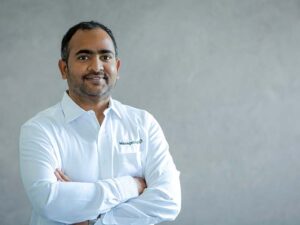
LogisticsGulf.com recently caught up with Praneeth V., Technical Evangelist, ManageEngine, for an exclusive one-on-one interview and the lowdown on the company, its product offerings, navigating the competitive maze, its expansion plans and its ambitions for the future.
LogisticsGulf.com (LG): What does being a Technical Evangelist at ManageEngine entail?
Praneet V. (PV): As a technical evangelist at ManageEngine, my role goes beyond technical consultancy and account management. I represent the company by speaking at industry events and engaging directly with clients, and I act as the voice of ManageEngine both internally and externally.
Drawing on strong stakeholder management, strategic planning, and client engagement skills, I help organizations align technology with their business objectives and create lasting value.
LG: What is ManageEngine’s equation with Zoho Corporation?
PV: ManageEngine is one of the divisions of Zoho Corporation, which is our parent company. Other prominent brands include Zoho.com, Trainer Central, and Qntrl.
Here’s a brief introduction to each of our brands:
Trainer Central is a comprehensive platform to help organizations build engaging online courses, nurture a learning community, and turn their expertise into a successful training business.
Qntrl is workflow orchestration software that helps organizations gain visibility and control over business processes by automating them.
Zoho.com offers over 55 cloud-based business and productivity tools that run the gamut, from sales and marketing to finance, legal, and analytics.
LG: In the world of AI-driven logistics, how is AI to detect anomalies, resolve IT issues faster and improve operational efficiency?
PV: In logistics, every minute of IT downtime shows up as a delayed shipment, a stalled warehouse, or a missed berth slot. AI changes this in four ways. First, it learns what normal looks like across applications, networks, devices, and cloud services, so it spots anomalies before they become outages.
Second, AI correlates signals across domains to show not only what is broken but what caused it, removing hours of manual investigation. Third, it acts: AI agents can run approved remediation workflows, such as restarting a service or rolling back a failed patch, while the team focuses on decisions that need human judgement.
Finally, it improves over time, because every resolved incident sharpens the next diagnosis. The result is fewer alerts, faster resolution, and IT operations that keep goods moving.
LG: With regard to digital supply chain security, how does one strengthen security across connected infrastructure, cloud platforms and IoT while addressing regional data requirements?
PV: A modern supply chain is only as secure as its least protected connection, whether that is a handheld scanner in a warehouse, a sensor on a container, or a partner portal in the cloud. First, start with visibility: a complete, continuously updated inventory of every device, identity, and workload.
Second, treat every access request as untrusted until verified, granting access based on identity and device health rather than network location.
Third, protect machine identities, from certificates to API keys, because connected devices now far outnumber people. Finally, design for data residency from day one, keeping sensitive operational and customer data where regulators expect it to be.
Our data centres in Dubai and Abu Dhabi help customers meet data residency and local regulatory requirements without compromising on capability.
LG: In which industry verticals does ManageEngine find applicability? (warehouses, ports transport network, regional supply chains
PV: ManageEngine serves organisations of every size across virtually every sector, because every business now runs on IT. In logistics, our solutions apply wherever operations depend on connected technology. In warehouses, we manage and secure the scanners, tablets, and terminals that keep picking and dispatch running.
At ports and terminals, we monitor the networks and systems behind cargo handling, where downtime directly affects throughput. Across transport networks, we secure fleets of mobile devices and keep dispatch and tracking applications available.
For regional supply chains, we provide a single view of IT across multiple sites, partners, and countries. Beyond logistics, our customers span government, banking and financial services, healthcare, education, retail, manufacturing, energy, and more.
LG: How is AI moving beyond assisting IT teams to investigating issues, recommending actions and executing tasks within human-defined guardrails in the area of Agentic AI?
PV: Until recently, AI in IT operations mostly answered questions and summarised data. Agentic AI goes much further, working in three stages. First, it investigates. An agent gathers logs, metrics, and context from across the environment and pieces together what happened—often in minutes rather than hours. Second, it recommends.
AI proposes the most appropriate fix and explains its reasoning, so the engineer can assess it quickly. Third, it executes. For approved, lower risk tasks, it carries out the action itself, such as isolating a compromised endpoint, revoking credentials, or raising a service ticket.
Throughout each of these stages, humans define the guardrails. Each agent has a clear scope, accesses only the data and tools it is authorised to use and logs every action for audit. High impact decisions still require human approval. Autonomy is earned, not assumed.
LG: Talk to us about the Zia Agent in action–what does it do exactly?
PV: Zia is the AI built into the ManageEngine platform, and Zia Agents are specialised assistants, designed for a specific IT task. Take a common scenario in security operations: a suspicious login alert fires on a server that handles shipment data.
Instead of an analyst manually trawling through logs, an alert investigation agent examines the alert; gathers related activity across users, devices, and systems; maps what it finds to known attack techniques; and presents a clear summary with recommended next steps.
The analyst then decides how to respond, starting from a complete picture rather than a blank screen. Analysts can also ask Zia questions in plain language to search logs, instead of writing complex queries. Every agent accesses only the data and tools it is authorised to use, every action is logged, and customer data is never used to train our models.
LG: What is the role of AI agents from the perspective of ManageEngine in Autonomous IT operations?
PV: For us, AI agents are what move IT from reactive to autonomous, but autonomy has to be built step by step. First, agents take on repetitive, high-volume work, such as triaging tickets, investigating alerts, and troubleshooting endpoints, freeing skilled people for higher value tasks.
Second, they connect domains that have traditionally worked in silos, so an issue spotted in monitoring can trigger a security check and a service ticket automatically. Third, they operate with graduated autonomy, starting in recommend-only mode and earning the right to act as confidence grows.
Finally, governance stays central. Every agent needs an identity, defined permissions, and a full audit trail. In this model, IT teams shift from operators to orchestrators, setting goals and guardrails while agents handle execution.
LG: What is your take on the future of enterprise AI?
PV: I see enterprise AI moving from experimentation to execution, shaped by four shifts. First, from answers to actions. The value is moving from AI that responds to questions to AI that completes work across systems. Second, from trust by assumption to trust by design.
As agents gain the ability to act, organisations will apply the same discipline to them as to employees: identity, least privilege access, oversight, and auditing. Third, from anywhere to sovereign. Enterprises increasingly want to know where their data lives, who processes it, and whether it trains someone else’s model.
Finally, from a separate tool to an invisible layer. AI will be woven into everyday workflows, and success will be measured by business outcomes, not model size.
LG: How significant is the ManageEngine footprint in the Middle East and how are you performing?
PV: The Middle East is one of the most important and fastest growing regions for ManageEngine. Organisations across the GCC and the wider region, from government entities and banks to logistics operators, hospitals, and universities, rely on our solutions to manage and secure their IT.
Momentum remains strong, with our business across the Middle East and North Africa growing by around 20% year on year. First, rapid digital transformation and national AI ambitions are driving demand.
Second, organisations increasingly want integrated IT management and security rather than disconnected point tools. Third, our investment in local infrastructure gives customers confidence. Finally, a strong partner ecosystem and local teams ensure we understand and respond to regional priorities.
LG: How quickly are you expanding in the region?
PV: We are expanding steadily across the Middle East. We’ve launched data centres in the UAE and Saudi Arabia and grown our physical presence, with offices now in Dubai, Riyadh, and Amman.
LG: Zoho recently opened an office in Amman’ Jordan; what are your expansion plans for the region?
PV: The new office in Amman was opened jointly for ManageEngine and Zoho. Zoho Corporation is the parent company, and ManageEngine and Zoho are two of its divisions, so the Jordan office serves both.
LG: Why are you participating in ‘Everything Ai 2026’ in Abu Dhabi and what are you hoping to derive from your presence here?
PV: At AI Everything Abu Dhabi, we will show how AI is evolving from assisting IT teams to working alongside them. Visitors will see Zia, the AI assistant built into our platform, and its agent capabilities across key domains such as enterprise service management, IT monitoring and observability, security operations, and more.
These agents do not just surface insights; they investigate, recommend, and act, with humans setting the guardrails. All of this is built on a privacy‐first foundation, backed by our UAE data centres. Our message is simple: Enterprise AI is becoming agentic, governed, and sovereign, and Abu Dhabi is the right place to see where it is heading.