Currently, the humanitarian institution increasingly sees contributions in the form of knowledge, expertise, people, infrastructure and assets
Dubai Humanitarian was instituted in 2003 in accordance with the directives of HH Sheikh Mohammed Bin Rashid Al Maktoum, Vice President and Prime Minister of the UAE and Ruler of Dubai.
It was created as a global platform for rapid humanitarian preparedness and response, bringing together UN agencies, international humanitarian organisations, humanitarian actors and responsible private-sector partners within a single operational ecosystem.
Today, it is the world’s largest humanitarian hub and the only independent humanitarian free-zone authority of its kind. Located near Jebel Ali Port and Al Maktoum International Airport, it can support responses reaching populations across Africa, Asia, the Middle East and beyond within hours.
Its mission is to lead a global network of humanitarian hubs, strengthen preparedness and emergency response, and foster collaboration, innovation and knowledge-sharing, enabling our members and partners to reach people in need quickly and effectively, while helping to save lives and protect human dignity.
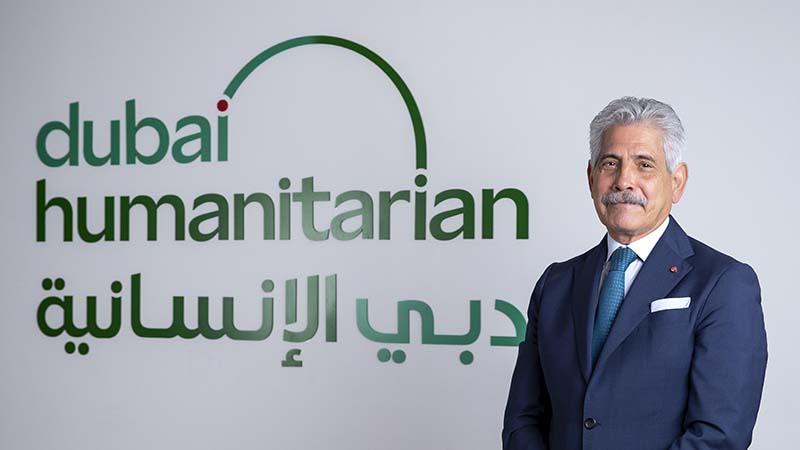
Giuseppe Saba, CEO and Board Member, Dubai Humanitarian, in a recent wide-ranging interview with LogisticsGulf.com provided us insights, observations and the low down on the role of the institution in facilitating, coordinating and overseeing humanitarian and relief work in global hot spots and war-torn areas.
The following are the transcripts of the interview:
LogisticsGulf.com (LG): Businesses need to move beyond traditional Corporate Social Responsibility initiatives to become active partners in global humanitarian response. Explain the transition and make your case.
Giuseppe Saba (GS): Corporate Social Responsibility has evolved significantly. Financial donations, sponsorships and community initiatives remain important, and businesses are increasingly contributing in other ways that strengthen humanitarian response.
Today, we increasingly see contributions in the form of knowledge, expertise, people, infrastructure and assets. In many cases, these contributions can have an impact that extends well beyond financial support. A logistics company may provide transportation and warehousing capabilities; a technology company may contribute digital solutions and data analytics; and academic institutions may share research, innovation and technical expertise. At Dubai Humanitarian, we see many examples of this in practice.
This evolution is also reflected in more structured partnerships and a broader understanding of shared responsibility. Humanitarian organisations are collaborating more closely with the private sector, donor institutions, governments, academia and innovation partners. Each brings unique strengths to the table: expertise, assets, networks, technology, funding and operational capabilities.
At Dubai Humanitarian, a significant contribution comes through logistics infrastructure, warehousing facilities, operational support and enabling services that allow humanitarian organisations to pre-position and move aid efficiently. Much of this support is provided in kind. If assigned a monetary value, it would represent a substantial portion of the overall cost of delivering humanitarian assistance.
By reducing these operational barriers, we enable our members and partners to direct resources where they matter most: reaching affected communities with life-saving assistance.
The opportunity is to combine financial resources, expertise, operational capabilities and long-term partnerships to maximise impact. This helps humanitarian organisations reach people faster, more efficiently and at greater scale.
LG: How can the private sector leverage its expertise, resources, technology and supply chains to support humanitarian efforts, strengthen crisis preparedness, and deliver aid more effectively?
GS: The private sector brings capabilities developed through managing complex global supply chains every day, moving goods across continents, operating sophisticated warehouses and coordinating transport networks at scale. In humanitarian response, especially during the first hours and days of a crisis, speed matters.
The ability to move goods, share expertise, deploy technology and innovate at scale can strengthen preparedness, improve response effectiveness and help reach more people in need.
There are four areas where these contributions are particularly valuable:
Supply Chain Excellence: At the heart of every humanitarian response is delivering the right aid to the right place at the right time. The private sector brings valuable expertise in logistics, transport, warehousing and supply chain management. During emergencies, these capabilities help move critical supplies quickly and efficiently.
Combined with the UAE’s world-class connectivity via its ports, airports and logistics infrastructure, private-sector partners help humanitarian organisations respond faster, maintain supply lines and reach more people in need.
Technology and Data: Technology companies can help humanitarian organisations anticipate crises, track shipments, understand needs and allocate resources more efficiently. Artificial intelligence, predictive analytics and supply-chain visibility tools can help organisations prepare earlier and make better-informed decisions when emergencies occur.
At Dubai Humanitarian, we are increasingly focused on innovation, data and actionable knowledge, as better information often leads to faster, smarter decisions during emergencies.
One example is our Humanitarian Logistics Databank, which brings together information on humanitarian relief stocks across participating hubs to improve visibility and coordination. By making relevant stock information more accessible, the Databank supports informed decisions on the positioning and mobilisation of supplies, strengthens preparedness and helps reduce duplication across humanitarian response efforts.
Operational Resources and Expertise: One of the private sector’s greatest strengths is its ability to mobilise resources quickly and at scale. Whether it is transport assets, warehousing capacity, connectivity, or specialised personnel, these bring capabilities that strengthen humanitarian response efforts.
Innovation: Private-sector innovation is often driven by solving real operational problems. Applied to humanitarian response, it can improve efficiency and help organisations reach affected communities more quickly. Examples include new approaches to last-mile delivery, advanced medical logistics, cold-chain solutions, renewable energy systems for field operations and drones for assessments and delivery support.
LG: What role can Public-Private Partnership (PPP) collaboration play in making humanitarian impact an integral part of business strategy?
GS: Public-private partnerships work best when each party contributes its strengths. The public sector provides the enabling environment through policy, regulation, infrastructure, customs facilitation, diplomatic engagement and crisis coordination. The private sector contributes expertise, technology, logistics capabilities, innovation and operational efficiency. Humanitarian organisations bring field presence, needs assessment and programme implementation.
In the UAE, entiti such as the Ministry of Foreign Affairs, Dubai Customs, DP World, Dubai Airports and other government partners play a key role in enabling humanitarian operations alongside humanitarian agencies and commercial partners.
These partnerships turn humanitarian support into structured, long-term collaboration. They strengthen preparedness, shorten response times and build more resilient supply chains. For example, UN agencies like the World Food Programme, UNHCR and UNICEF identify humanitarian needs and lead response efforts; governments provide coordination and an enabling environment; and private-sector partners contribute logistics, technology, infrastructure and expertise.
For businesses, this also creates a practical way to make humanitarian engagement part of long-term operations, by applying capabilities they already have through established partnerships rather than relying solely on occasional contributions.
LG: Briefly explain some key accomplishments and milestones of Dubai Humanitarian to date.
GS: Through its community members, humanitarian stocks valued at an average of US$ 200 million have been managed, and thousands of aid shipments have been facilitated over the years, supporting emergency responses across multiple continents. This year in 2026 to date, around US$ 37 million of relief and medical items were imported and US$ 60.7 million were exported across 95 countries, supporting responses to emergencies including Gaza crisis, Ebola in the DRC, floods in Nepal and Mozambique, and the situation in Afghanistan.
DXBH is a dedicated humanitarian free-zone model, supported by efficient customs processes, regulatory facilitation, strong government partnerships, and robust logistics infrastructure. This has helped ensure continuity of humanitarian operations even during periods of global disruption, allowing critical relief supplies to continue moving when supply chains were under pressure.
Beyond logistics, Dubai Humanitarian has strengthened its role as a convener of the humanitarian community through international forums and partnerships with governments, donor institutions, academia and the private sector, helping to advance preparedness, innovation and more effective humanitarian response globally.
Taken together, these milestones reflect the development of a humanitarian platform that combines operational readiness with international cooperation to create a Global Safety Net, starting with the connecting the existing world’s humanitarian hubs. The value lies in the ability of members and partners to mobilise established infrastructure, relationships and expertise when emergencies occur.
LG: What are your key supply priorities? Medicine, medical supplies, food, tents, blankets, and how do you create safe passages and corridors to ensure continued supplies?
GS: Supply priorities are determined by our humanitarian member organisations, based on assessed needs and the nature of each emergency. Dubai Humanitarian supports the operational environment that enables those organisations to position and move the supplies they identify as priorities.
Maintaining supply lines also depends on coordination with the relevant authorities, humanitarian organisations, manufacturuing suppliers, and logistics partners. Access restrictions, damaged infrastructure and changing security conditions can affect available routes.
Through our infrastructure, facilitation services and partnerships, we help members coordinate transport requirements, support humanitarian airlifts and explore alternative routes when conventional options are disrupted. Decisions on humanitarian access and the delivery of assistance remain with the relevant authorities and humanitarian organisations.
LG: What are the logistics challenges confronting humanitarian logistics in troubled hotspots regionally and internationally? How are you able to overcome these and streamline supplies?
GS: Humanitarian logistics often operates in highly uncertain environments, whether caused by conflict, natural disasters, disease outbreaks or large-scale displacement. Key challenges include restricted access, damaged infrastructure, border constraints, security risks, supply-chain disruptions and rapidly changing humanitarian needs.
Humanitarian supply chains therefore need to be agile and adaptive. This means pre-positioning relief stocks, working closely with the private sector, UN agencies, NGOs and governments, and maintaining multiple transport options so supplies can continue moving when traditional routes are disrupted. During the response to Afghanistan, for example, supplies were moved from Dubai through multi-country overland corridors when conventional transport routes faced limitations. The Afghanistan experience demonstrates why established partnerships, pre-positioned supplies and alternative transport options matter: they provide the flexibility to adapt when normal routes are unavailable.
LG: How supportive is the Government of Dubai/UAE in your multiple operations and activities?
GS: Dubai Humanitarian is under the umbrella of the Mohammed Bin Rashed Al Maktoum Global Initiatives, and is supported by the Government of Dubai. All our local partners and other national entities are a key enabler of an effective humanitarian response.
We have also seen that, during periods of major global disruption, exceptional measures such as humanitarian fast-track clearances and dedicated humanitarian corridors helped maintain the continuity of critical aid shipments. Humanitarian shipments benefit from fast, efficient handling through dedicated processes and close coordination among relevant authorities.
This support includes humanitarian air bridges, the mobilisation of national assets to transport relief cargo, documentation facilitation and clear regulatory frameworks through the Customs authorities. These measures enable humanitarian organisations to operate efficiently and respond rapidly to crises.
The contribution extends across infrastructure, warehousing, office facilities, transport coordination and the wider enabling environment. The combination of transport connectivity, regulatory facilitation and government coordination is particularly important because it helps members translate available relief stocks into a timely operational response.
LG: How have Dubai Humanitarian’s responsibilities increased with growing regional and international geopolitical tensions and population displacement?
GS: Growing geopolitical tensions, humanitarian crises and population displacement have placed increasing pressure on humanitarian operations, requiring greater preparedness and operational flexibility. At Dubai Humanitarian, this has meant facilitating exceptional, time-sensitive logistics solutions, supporting humanitarian airlifts, coordinating transport requests and working closely with governments, logistics providers and humanitarian partners to maintain the movement of critical relief supplies, even under challenging circumstances.
However, one of the greatest challenges facing the humanitarian community today is the widening gap between rising humanitarian needs and available funding. Increasing transportation, procurement and operational costs are placing additional pressure on humanitarian organisations at a time when resources are already stretched.
In this environment, Dubai Humanitarian continues to support its members through shared infrastructure, logistics and facilitation services, humanitarian airlifts and transport support initiatives that help reduce operational costs and maximise the impact of limited resources. This allows humanitarian organisations to direct more of their available funding towards reaching affected communities.
Our role has also evolved beyond warehousing and emergency logistics. Today, there is a greater focus on preparedness, supply-chain sustainability and resilience and closer collaboration across the humanitarian ecosystem. Central to this is our ambition to strengthen the Global Safety Net, a connected network of humanitarian hubs and partners that can share information, expertise and logistics capabilities to improve preparedness and support more coordinated responses to emergencies. By strengthening these connections, we aim to help humanitarian organisations mobilise essential supplies more efficiently, particularly as needs increase and resources become more constrained.
Ultimately, our priority is to strengthen the systems, partnerships and operational capabilities that allow the humanitarian community to prepare and respond effectively, while making the most efficient use of the resources available.
Brief Bio
Appointed as CEO of ex-Dubai’s International Humanitarian City (IHC) in early March 2017, now ‘Dubai Humanitarian’ and Member of the Board since April 2023, Giuseppe Saba brings approximately 40 years of extensive experience in the humanitarian field within the International Cooperation of the Italian Ministry of Foreign Affairs, the United Nations, and international organisations.