Operation of the trains at speeds of up to 200 km/h on the Dammam–Riyadh route
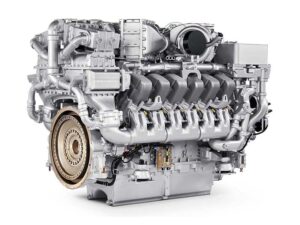
The mtu engines from Rolls-Royce will soon be powering more high-speed trains in Saudi Arabia. The company has received a major order for 50 mtu Series 4000 engines from Stadler Bussnang AG, one of the world’s largest manufacturers of rail vehicles, according to a press communication.
A total of ten trains will be in service in future and will travel at speeds of up to 200 km/h on the Dammam–Riyadh route. Until then, four trains will already have completed extensive test and approval runs in Europe and Saudi Arabia.
The mtu Series 4000 engines will once again prove their reliability under the most demanding conditions. Since 2012, more than 70 12V 4000 engines have been in use in similar trains operated by Saudi Arabia Railways.
Smooth operations
“They ensure smooth operations despite extreme ambient conditions with temperatures above 50°c and the influence of desert dust,” stated Christopher Weckbecker, Director Global Rail, Rolls-Royce.
“We are delighted that all diesel-powered passenger trains on the Arabian Peninsula are powered by mtu Series 4000 engines – this is a strong vote of confidence in our outstanding products. At the same time, this order supports our strategy by expanding further into regional growth markets, enlarging Rolls-Royce’s global footprint in rail application,” he continued.
A total of 50 12V 4000 R64 mtu engines, each with a power output of 1,500 kW, will be delivered. Four of the engines will drive each train with two power cars. A further ten engines are intended for reserve power cars and as spare units to ensure continuous passenger service even during maintenance work.
Option for 40 engines
The contract between Rolls-Royce and Stadler Rail also includes an option for 40 engines for a further ten trains.
The new trains will significantly improve the economic network between the two metropolises Dammam and Riyadh.
“For us, mtu propulsion technology from Rolls-Royce is a central component in this project. It not only enables high speeds, but also meets the highest standards of environmental compatibility, energy efficiency and operational safety,” asserted Tobias Arnold, Commercial Project Lead, Stadler.