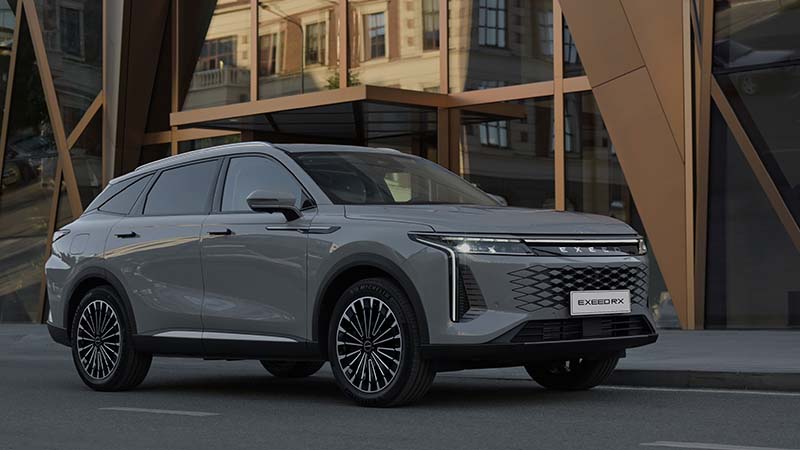
The UAE has never lacked premium SUVs. A drive to any major district in Dubai presents immediate evidence: a rolling inventory of flagships, each vehicle representing the manufacturer’s best attempt at a high-performance luxury project.
However, a meaningful evolution is underway, driven not purely by fashion but also economics and infrastructure. The question premium buyers are now asking is how practical it is to own a vehicle over the long term.
Much of this shift can be traced directly to the UAE’s accelerating electrification agenda. The charging network is expanding, and a wave of private-sector charging deployments have collectively moved the infrastructure conversation onward.
Realities
The EXEED RX SUPER HYBRID enters this environment as a vehicle engineered less for showroom appeal and more for the realities of daily operation. Its range-extended electric vehicle architecture delivers a combined driving range exceeding 1,300km on a full tank and full charge under the CLTC (China Light-Duty Vehicle Test Cycle) testing cycle, according to a press statement.
Al Ghurair Mobility has constructed an after-sales framework that reflects a fundamental understanding of what premium ownership actually requires in this market: confidence that the service centre is staffed by technicians trained specifically on REEV systems, stocked with the correct components, and operating within structured, repeatable protocols.
The fleet dimension deserves particular attention because it strips away emotional variables of the private purchase decision and exposes what remains: cost per kilometre, uptime, maintenance predictability, residual confidence, and other non-negotiable metrics.