Highlights AI’s growing impact on UAE’s travel ecosystem
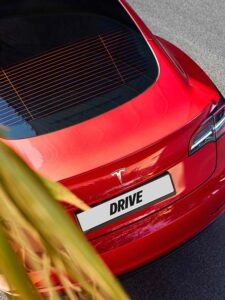
Yango Drive, the car rental service and part of the global tech company Yango Group, has published its 2025 Mobility Report, an industry analysis exploring how AI is reshaping mobility across the UAE.
Based on publicly available government and market data, the report examines shifting traveller behaviour, mobile-first discovery, and the operational role of AI in transport, positioning the UAE as one of the world’s most advanced environments for testing AI-powered mobility.
The analysis points to several core trends shaping the UAE travel ecosystem.
App-based and multimodal
Dubai operates an app-driven mobility ecosystem spanning metro, tram, buses, marine transport, taxis, ride-hailing, car-sharing, and traditional rentals. Public transport, shared mobility, and taxis carried 747.1mn riders in 2024, averaging over 2mn trips per day.
Of 153mn trips, taxis accounted for over 115mn, with shared mobility contributing approximately 32mn, highlighting strong app-based, point-to-point demand. In 2026, travellers are selecting modes based on specific needs, combining options through platforms such as S’hail.
This multimodal behavior generates the data required for AI-driven routing, ranking, and real-time recommendations.
Real-world scale
High tourism volume, mobile-first behavior, and a diverse resident population make the UAE an effective real-world stress test for AI-driven mobility platforms. Dubai welcomed 18.72mn international visitors in 2024, while DXB handled 92.3mn passengers.
The country has near-universal digital adoption, with around 99% internet penetration and around 97% smartphone usage. Its rent-a-car market is projected to reach US$ 1.8bn by 2032, and short-term rentals accounted for approximately 71% of the UAE car rental market in 2024, reflecting leisure-driven, high-frequency demand.
Together, these trends show how AI-enabled tools are becoming embedded in everyday travel planning rather than used occasionally.
AI advantage
Marketplaces benefit from rich behavioral and transactional data, enabling continuous learning across clicks, bookings, and cancellations. Dubai’s rental fleet expanded from 49,725 to 71,040 vehicles in one year, a 43% increase, supported by 3,494 rental firms.
Supply innovation is accelerating, with high-end rentals growing 73% year over year and electric-vehicle adoption rising 50%, creating new behavioural clusters and price-value layers.
This fragmented yet fast-growing environment allows AI to improve ranking, matching, quality scoring, dynamic pricing, and supply allocation, positioning marketplaces as the most data-rich testbeds for machine learning in mobility.
Operational AI
Yango Drive’s report finds that AI’s most immediate impact comes from operational optimisation rather than full autonomy. Visible gains are already emerging across dynamic pricing, supply balancing, demand prediction, and routing.
Dubai has piloted AI-based V2X traffic systems that reduced congestion by up to 37%, while the RTA’s AI Strategy 2030 includes 81 projects targeting travel-time reductions of 20–30%. Hala’s e-hail taxis use capped peak multipliers of up to 1.3 times, and Dubai’s upcoming taxi reforms will link app booking fees to peak and off-peak periods. These developments show how data-rich transport systems enable real-time optimisation at scale.
“At Yango, our mission is to simplify everyday movement through intelligent technology. By sharing these insights, we hope to support smarter mobility decisions and accelerate innovation across the UAE’s travel ecosystem,” asserted Islam Abdul Karim, Regional Head, Yango Group Middle East.