

Moscow Vignettes
My recent visit to Moscow, the consummate capital city and quintessentially the soul, heartbeat and the epitome of Russia—historically, culturally and politically, at the invite of the Moscow City Tourism Committee, was enchanting and overwhelming and can only be described in superlative terms.
A visit to one of the world’s greatest cities can be superbly enjoyable and eye-opening, as this correspondent found out. The essence of spectacular Moscow lies in the essence of the embodiment of panache, pomp and pageantry of this mega city that encompasses legacy and exudes historical old-world charm.
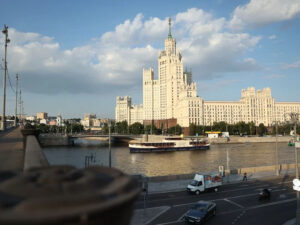
Moscow is a veritable treasure trove and repository of history and culture. My memorable and enjoyable visit to Moscow helped me see the tourist gems and attractions up close and personal and unveil the enigma and mystery of this gorgeous city. Well and truly, my memories of Moscow are indelible and will linger on for a long time to come–Editor.
Moscow beckons
The unending largely flat grasslands (steppes) present a fascinating terrain and sight for passengers flying into Moscow’s Domodedovo International Airport. Welcome to the capital and the biggest city of the largest country in the world—a mega transcontinental nation that spans 11 time zones and encompasses more than one-eighth of Earth’s inhabited land area.
The name of the city is attributed to the Moskva River that runs through this enthralling city. Magnificent Moscow is an amalgam of old and modern architecture and home to the imposing and impressive 15th Century constructed captivating Kremlin—the soul and veritable citadel of Russia’s Government and political establishment.
The city is characterized by long avenues and splendid squares, leafy boulevards, well-manicured parks and gardens, luxury housing, quaint districts, and unique compelling cultural and historical sites.
My privileged sojourn to the heritage-soaked city of Moscow was the magnanimous invite of the Moscow City Tourism Committee, the gracious hosts who pulled all the stops to make my stay and those of the three accompanying journalists. The meticulously planned itinerary was professionally and exceedingly well-conducted replete with accompanying English-speaking hosts and Russian language interpreters.
Luxury Hotel
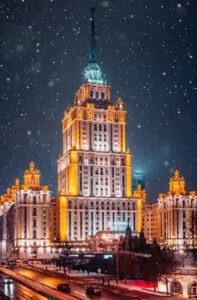
Upon arrival the media delegation was ushered into the palatial and extraordinarily lavish Radisson Collection Hotel Moscow (with well-appointed rooms) on Kutuzovskiy Avenue overlooking the Moskva River and within close proximity of the Kremlin.
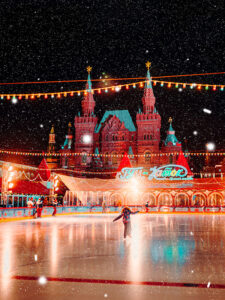
The well-orchestrated and down-to-the wire tour programme kicks off with a walk-about at the Zaryadye Park overseeing the historic St. Basil’s Cathedral, the famed Red Square and the iconic Kremlin.
As the first large scale park to be built in Moscow in the last fifty years, Zaryadye provides a spectacle that defies description. It is at once park, urban plaza, social space, cultural amenity, and recreational oasis—all rolled into one.
A virtual, sophisticated, breath-taking but real time flight over Moscow is the next highlight. The platform of the appropriately dubbed ‘Flying Cinema’ takes excited and curious spectators over a series of key Moscow landmarks including the Great Memorial War Memorial; Victory Park; the Triumphal Arch—the symbol of Russia’s victory in 1812; an aerial view of the Krymsky Bridge—the first large-span suspension bridge in Russia; Christ the Saviour Cathedral, the main Cathedral of the Russian Orthodox Church and other scintillating sites.
The Red Square and St. Basil Cathedral
The extravagant and eminently attractive Red Square, steeped in history, is one of the oldest and largest squares in Moscow. Owing to its historical significance and the adjacent historical buildings, it is regarded as one of the most notable and important squares in Europe and the world.
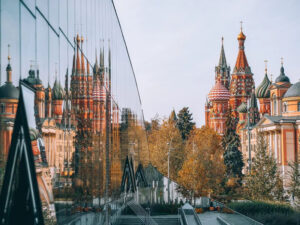
The Red Square has an almost rectangular shape and is 70m wide and 330m long. It extends lengthways from northwest to southeast along part of the wall of the Kremlin that forms its boundary on the southwest side.
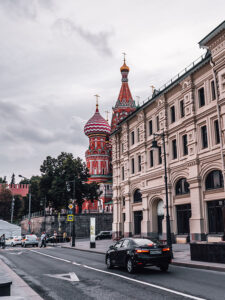
The Cathedral of Vasily the Blessed, commonly known as Saint Basil’s Cathedral, is a Russian Orthodox church in Red Square of Moscow, and is one of the most popular cultural symbols of Russia. The building, now a museum, is officially known to be built between 1555-1561
State Historical Museum on Red Square
The State Historical Museum of Russia is a museum of Russian history located between Red Square and Manezhnaya Square in Moscow. The museum’s exhibitions range from relics of prehistoric tribes that lived in the territory of present-day Russia, to priceless artworks in the possession of the then ruling Romanov dynasty.
The Bolshoi Theatre
Whilst in Moscow, a visit to the absorbing and historic Bolshoi Theatre, a major landmark, is de rigueur. With elaborate architecture originally designed by architect Joseph Bové, it holds ballet and opera performances for theatre buffs and dance and culture aficionados.
The Bolshoi Ballet and Bolshoi Opera are among the oldest and best known ballet and opera companies in the world. It is by far the world’s biggest ballet company, with more than 200 dancers.
The Cosmonautics and Aviation Centre
In spring 2018, a new world-class museum complex was opened— the prominent Cosmonautics and Aviation Centre in the renovated Cosmos pavilion. The huge exhibition space, which is dedicated to the domestic history of space exploration in Russia, a space and cosmic pioneer. The Centre has become an important stage in the revival of the Exhibition.
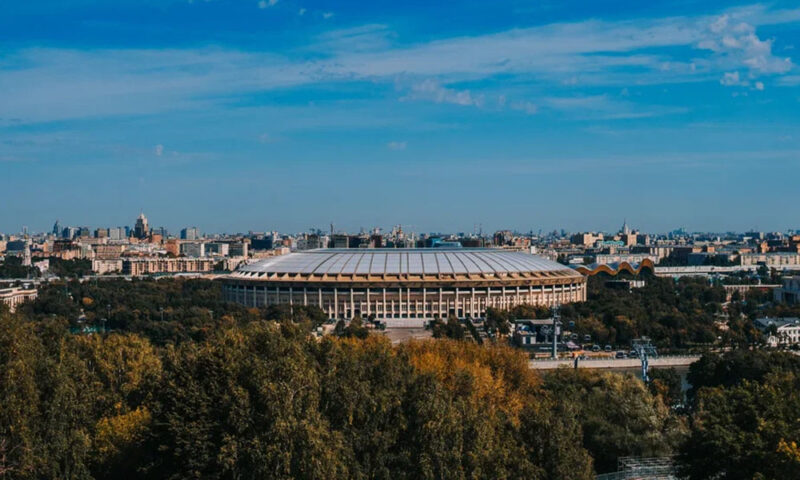
The monumental building has a rich history. From the outside, it looked like a barn, where agricultural machinery was exhibited on two tiers. In 1954, the pavilion was completely rebuilt and acquired its present appearance. The exposition expanded and became known as the mechanization and electrification of Agriculture in the former USSR.
However, in 2014, the idea of renovating the space exposition was supported by Moscow residents, and in 2017, large-scale restoration work began, which was carried out in record time, and completed in March 2018.
This is a must-go-to venue for space fans to soak in the chronicles and endeavours of Russia’s rich space exploration history.
The Ferris Wheel, ‘The Sun of Moscow’
The Sun of Moscow is a panoramic wheel in VDNK park, Moscow, Russia. At 140m high it is the the tallest Ferris wheel in Russia and in Europe, surpassing London Eye (135 m) in raw height. The wheel opened in September 2022, when Moscow’s 875th anniversary was celebrated.
The total weight of the parts is about 1,500 tons. The wheel has 30 cabins. Each of them weighs 4300kgs and can accommodate up to 15 people. One revolution takes 18 minutes 40 seconds. Visibility from the wheel is about 50 kilometers (31 miles).
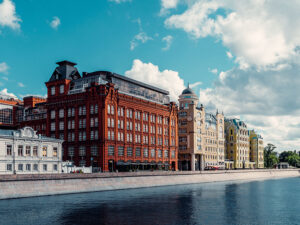
Cruise on the Moskva River (Radisson Royal Restaurant Ship)
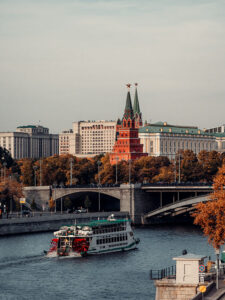
The central Moscow River walk is a two-hour route around the center of the capital from the Pier Novospassky most to the Vorobyievi Gori and back.
Departing from the Novospassky most pier, the boat will glide through the Moskva River waters passing by the city’s major landmarks. The most beautiful views will unfold before your eyes from an unusual perspective as you take this gentle cruise, as guests take in the sights and sounds of the city and the numerous city highlights along the banks of the riverbanks.
With short stops at the main central piers of the capital made along the way, in two hours the boat will take you to the Novospassky Pier. Throughout the cruise guests are welcome to enjoy a variety of snacks, hot and cold dishes, soft drinks and refreshments.
The Kuskovo Memorial Estate
The renowned Kuskovo Estate, a short distance outside Moscow, is first mentioned in documents dating from the beginning of the 16th century.
The estate was an ideal hunting ground, and it even attracted the attention of the Tsar. In 1715 the Kuskovo estate was bought by Count Boris Sheremetev from his younger brother Vladimir. The elder Sheremetev was a well-known Field Marshal in the times of Peter the Great, a hero of the battle of Poltava, and a companion-in-arms to the Tsar.
Subsequently, the neighboring Cherkassky estate, Veshniakovo, was added to Kuskovo, and in accordance with the fashion of the day, a huge country residence was built on the combined grounds for holidays and pleasure trips.
The construction of the estate was carried out in the 1740s-1790s on an area of over 300 hectares. It was the work of hundreds of serf and hired masters, both Russian and foreign, among them the well-known Russian architects.
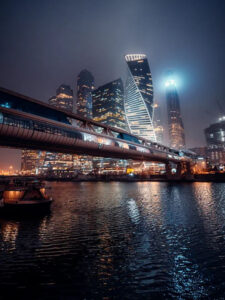
The Moscow Metro
This correspondent took a short ride on the Moscow Metro which reaches nearly every part of the city of Moscow in Russia. It is one of the most heavily used metro systems in the world. It is also famous for its stations, which are heavily decorated with paintings.
In total the metro is 314km long and has 214 stations. On an average day, around 7.2 million passengers use the metro. As in many subway systems every line has its own colour, name and number. In total there are 14 lines.
Culinary:
We were treated out to a superb fare and fine dining on different occasion at the Sempre Restaurant and at the Ruski and the Michelin starred White Rabbit.
Sempre:
The Sempre Restaurant is a green corner in the centre of the Russian capital, where you can find European cuisine with unique interpretation and a unique designer eco-interior, the creator of Belgian designer Guste Sempre.
The mysterious garden, inspired by the greenery of the northern flora, blurs the boundaries of the city and nature. There are vines hanging from the ceiling, forest moss on the walls and handmade tableware and cutlery.
Ruski
The Ruski Restaurant prides in providing unrivalled panoramic view of Moscow’s skyline and holds the title of the highest restaurant in Europe. The food is delectable and reflective of delicious Russian fare.
The White Rabbit
With a spectacular 360-degree view of Moscow from its 16th-floor dining room overseeing Russia’s Ministry of Foreign Affairs Headquarters, the Michelin starred White Rabbit is arguably the best place in the capital for dining with a view.
The décor is opulent, colourful and playful, the main dining room sits under a domed glass roof and features turquoise, yellow and red velvet sofas and cosy-curved booths.
Peculiar and wonderful rabbit-themed art adorns the restaurant, including giant Russian dolls, or matryoshka, with white rabbits in their arms.
Providing us great company for a sumptuous lunch were our wonderful effervescent hosts Maria Nikanorova, Deputy Director General, Project Office for the Development of Tourism and Hospitality of Moscow for Public Relations; Anastasia Radovitskaya, Head of Press Office, and Natalia Molochkova, Head of the Department for Interaction with Foreign Authorities.
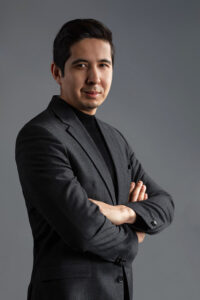
LogisticsGulf spoke exclusively to Bulat Nurmukhanov, Head of the International Cooperation Department, Moscow City Tourism Committee, on the sidelines of the luncheon reception on a wide range of subjects.
LogisticsGulf (LG): To what extent does the global economy affect tourism in Russia?
Bulat Nurmukhanov (BN): Despite the volatility of the economy and the fall-out of sanctions, tourism in Russia continues its gradual growth as a promising industry. For example, in 2022 the tourist flow in Moscow reached almost 18 million guests, which is one million more than in 2021.
LG: Russia’s climate determines the type of tourists, and its geographic location gives it a unique advantage. How does Russian tourism work to prepare services for receiving tourists?
BN: Indeed, the Russian climate is very diverse. As for Moscow, summer is the most appealing season for tourism. In summer, Moscow feels like a resort with its inviting temperate. At this time, the tourists can enjoy water transport rides, sunbathe on the beaches, or pick one of more than 3,500 summer verandas for a delicious lunch.
Over the past 10 years, the city has put in order about 900 parks and green areas. In addition, Moscow is home to over 18,500 establishments of the food industry and 10,000 cultural institutions: theaters, museums, libraries, parks, cinemas, concert halls, and other tourism attractions.
LG: Russia is the biggest nation on the planet; a country so vast it spreads over 11 time zones. How can you encapsulate the essence of Russia?
BN: In one word—diversity. Russia is a mega country, the largest nation on the globe. There are as many as 193 ethnic groups living in Russia with a great cultural heritage and unique nature.
LG: How important is tourism for Russia and how is the industry faring currently?
BN: Undoubtedly, the development of tourism is one of the key directions of government policy. This has spurred the development of domestic tourism, which has increased sharply after the pandemic. Meanwhile, Russia strengthens its connections with other countries, boosting visa opportunities and highlighting its tourism potential for each nation.
LG: How liberal is Russia’s tourist visa regimen/policy?
BN: UAE and Qatar enjoy a visa-free policy. The rest of the countries are on our e-visa list, with Oman, Bahrain, Kuwait and Saudi Arabia possibly adopting a visa-free policy as well according to the Russian Ministry of Foreign Affairs (MFA).
As of March 2022, Kuwait, Oman, Bahrain, and Saudi Arabia visitors can obtain visas without a tourist invitation, via their hotel reservations. Additionally, e-visas for 52 countries will soon be launched, undoubtedly spurring further in-flow of tourism. Russia is also about to launch visa-free group agreements with China and Iran that will allow tourist groups of 5 to 50 people to come to Russia without any visa.
LG: What sets Moscow apart? What are your Unique Selling Propositions (USPs) from a tourism perspective?
BN: Moscow is the capital of Russia; it is an absolute must see if you want to visit the largest country in the world. Moscow is notable for its versatility. Today, the city offers a high-tech, accessible, and comfortable environment for every tourist.
Moscow’s Government employs a human-centered approach to creating infrastructure and services for the citizens. The Russian capital offers various services and attractions for all kinds of visitors: families with children, business travelers, or older people. We have plenty of offerings for every category of tourists.
LG: What are the main tourist attractions for Moscow?
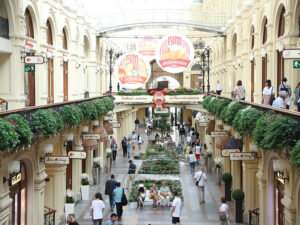
BN: The most popular, must-see tourist attractions are the Saint Basil’s Cathedral, Red Square, Moscow Kremlin, Bolshoi Theatre, Gorky Park, Kolomenskoye, Pushkin Museum, Arbat Street, GUM Department Store, among many others
LG: How well developed is the tourism infrastructure in Moscow/Russia?
BN: The highly developed urban infrastructure in Moscow means accessible transport, parks, and well-furnished embankments, as well as the ability to get any services you need around the clock.
Tourism infrastructure is also rapidly improving and expanding. Over the past 11 years, 72 new hotels were built in the city, featuring over 12,000 rooms. Today, Moscow is second in the country by the number of accommodation facilities (1,900). In addition, Moscow is improving its facilities for helping tourists get around.
Tourist Information Centers (TICs) are an important part of Moscow’s tourism infrastructure. They allow travelers to easily get acquainted with this new highly urban environment. TIC employs professional tour guides to help you learn more about the sights of Moscow and plan your own itinerary, take a closer look at how the city lives, and discuss useful tips.
The flagship TIC is located in Zaryadye Park. It was the first in Moscow, launched in 2020. Five more TICs are located at the Northern and Southern River Terminals, as well as at Moscow’s three airports—Sheremetyevo, Vnukovo, and Domodedovo.
LG: Is Moscow the most visited city for tourists? What are the other popular cities and destinations for tourists?
BN: Moscow is the most visited city in Russia and accounts for a significant portion of internal tourism. However, Moscow does not compete with other regions for tourists, opting to develop joint projects instead.
The Moscow interregional travel framework fosters cooperation and joint travel packages. There are programs that include visiting Moscow, St. Petersburg and Nizhny Novgorod. Kazan, and the Moscow Region is already underway.
These include new routes, special offers, and useful digital products. Visiting several cities in one trip is popular even among foreign tourists. The development of Moscow-Kazan cooperation manifested itself in the two capitals of One Horizon project.
The routes connecting these two regions are expected to be popular both with Russian travelers and visitors from the Middle East, India, Iran, and the CIS countries.
LG: List the ‘Top 10’ must-see destinations and 10 must-do activities in Moscow City that Middle East tourists must visit and experience?
BN: There is a Russian travel portal called ‘Discover Moscow’ that enables tourists find the best events for every taste. Some of the most popular places to visit in Moscow are undoubtedly the Kremlin, Tretyakov Gallery, VDNH, Bolshoi Theatre, Ostankino TV tower, Zaryadye Park, and more.
Moscow is a city with a long, rich history. More than 8000 monuments of the city’s cultural heritage have been preserved, including apartments of poets and composers, estates, monuments, churches, temples. Moscow is home to three objects of cultural heritage included in the UNESCO World Cultural and Natural Heritage List: Kremlin and Red Square Ensemble; The Church of the Ascension in Kolomenskoye and The Ensemble of the Novodevichy Monastery.
LG: Are there any off-the-beaten-path attractions or hidden gems in Moscow that you would recommend to adventurous travelers?
BN: That would be the Kuskovo Estate. This astounding estate, once a summer residence, comprises a central palace with a magnificent ballroom, several smaller buildings, each impressive, and a huge park complete with French gardens, ponds, lakes and sculptures.
The Botanical Garden of the Moscow State University, nicknamed Aptekarsky Ogorod, was founded in Moscow by Peter the Great in 1706. The legend has it that the first Russian emperor himself planted spruce, fir, and larch here, the latter of which is growing up to now. The garden received its name (Aptekarsky means ‘belonging to an apothecary’) because originally it was intended to only grow medicinal plants here.
Izmailovsky Market
Izmailovsky market is one of the locations that should definitely take a top spot on your places-to-visit-in-Moscow list. A wide range of Russian souvenirs, paintings, antique and craft gifts and second-hand trifles at a fair price – this place will meet your every need.
Walking through the stalls, you will not only find nice gifts for everyone, but you will also feel the authentic national atmosphere of Russia. The market is situated in beautiful Izmailovsky Kremlin.
LG: What are the lesser-known facts about Moscow that would surprise and intrigue tourists?
BN: Moscow has the world’s largest forest in an urban area within its borders. About 50 percent of Moscow’s territory is covered by greenery, making it one of the greenest cities on the planet.
Last year, electric buses transported over 117 million people. Since 2018, diesel buses in Moscow have been replaced with electric buses. Last year alone, emissions of CO2 were 36,000 lower, and pollutants, 280 tons lower in the city.
One of the most expensive streets in the world is Stoleshnikov Pereulok, a pedestrian street connecting Tverskaya and Petrovka. One square meter here costs more than US$ 3,000 a year to rent.
St. Basil Cathedral on the Red Square is the most recognizable building in Russia. In fact, it’s nine churches in one place. And its official name is the Cathedral of the Intercession of the Most Holy Theotokos on the Moat.
The Moscow subway is called the most beautiful in the world–a large number of stations are listed as cultural heritage sites. A tip that can be particularly useful for tourists navigating Moscow: if you hear a male voice announce the next station, you are on a train bound for the city. If you hear a female voice, then you are headed out of the city.
LG: Moscow has a vibrant culinary scene. Are there any traditional Russian dishes or local food markets that visitors should try during their stay?
BN: Of course, the Russian cuisine is unique, special in it are the ‘shchi’ soup with cabbage, pelmeni, Russian (Olivier) salad, Russian pies and more. There is a Russian travel portal called RUSSPASS where tourists can find the best restaurants.
There are also two 2-star Michelin Restaurants- Artest Chef’s table and Twins Garden; Seven one Michelin Star restaurants (Beluga, Biologie, Grand Cru, Savva, Delfie, White Rabbit); and two Michelin Green star restaurants (Biologie, Björn, Twins Garden). In total, the Michelin Guide Moscow 2022 selection includes almost 70 restaurants.
LG: Are there any upcoming events, festivals, or exhibitions in Moscow that tourists should be aware of and plan their visit around?
BN: There is a Russian travel portal called Discover Moscow where tourists can find the best and even off-the-beaten-path events for every taste. The biggest event in the near future, the Moscow Urban Forum that commenced in August of this year in Moscow.
The Moscow Urban Forum has been held since 2011 for experts, representatives of the business community, and urbanists. The forum’s exhibition areas offer tourists a chance to enjoy themselves and learn a lot of new and interesting things about Moscow.
LG: Safety is a concern for many travelers. Are there any specific tips or recommendations you would give to tourists to ensure a safe and enjoyable visit to Moscow?
BN: In recent years, Moscow has become one of the safest cities in the world. And we are very glad that tourists come to us, take a look at the city itself and return here again and again. Moscow has a ‘Smart City” system – outdoor CCTV cameras and a face recognition system on the streets and in the subway.
According to some estimates, the crime rate in Moscow is lower than in many European tourist cities such as Paris, Rome or London. Moscow has been and remains one of the safest cities for tourists.
LG: Why should a visit to Moscow be on the bucket list of Middle East tourists?
BN: With nearly 1,000 years of recorded history, Moscow is a city of majesty, elegance, and unique culture. Its architecture is legendary: Red Square, Bolshoi Theater, Kremlin, ‘Stalin’s 7 Sisters’ (absolute must see) and so much more.
Moscow tourist spots and activities are in abundance for the kids as much as for the adults. The Museum of cosmonautics, Moscow Zoo, Moskvarium are some of Moscow’s top places to visit with kids. Moreover, Moscow’s subway system is the stuff of legends. Marble and granite, bronze statues, colorful mosaics, and more.
Moscow Subway is truly grand, and it has attracted visitors from all over the world since the 1930s. Furthermore, the city is now one of the most exciting dining destinations in the world. From traditional Russian specialties to modern dining with a twist to international favorites, there’s plenty of great food to enjoy in Moscow.
LG: Middle East tourists visiting Moscow typically face a language barrier as they do not speak the Russian language. What advice does Moscow City Tourism Committee offer the tourists in this regard?
BN: Fortunately, the use of the English language is quite widespread in Moscow, our city is a genuinely cosmopolitan one. There are lots of foreigners who live, study in Moscow and come here for business and tourism. So, our tourism industry is adapted to foreign visitors: there are guidelines and navigation tips in English in the Moscow Subway and key tourist places.
We encourage tourists to visit our six tourist information centres that provide the most relevant information on cultural sites and current events in the city. The employees of these centers are experienced guides who are fluent in English and even other languages, so it’s easy to get the necessary information on tourism in Moscow.
LG: How many weeks or months in advance should Middle East tourists book their visit and stay in Moscow?
BN: The earlier the better, because this allows booking hotel rooms and tours at a lower price. Especially if we’re talking about peak seasons, summer and the New Year holidays in Moscow, since in winter, when the city is generously illuminated and decorated for the holidays, Moscow is already a popular destination both for Russian and foreign tourists.
LG: What is the Moscow City Tourism Committee doing to train and educate the private tourism sector in Moscow on how to deal with Middle East tourists?
BN: First, our main goal is to serve as a bridge between Moscow and the Middle East tourism industry. We do believe that, through direct communication, our tourist industry could learn more about the actual demands, interests, specific requests and desires of tourists from the Middle East countries.
Considering this, we arrange roadshows of Moscow tourism companies abroad to establish face-to-face contact between business and organize familiarization trips to Moscow for foreign companies. We are convinced that these efforts contribute a lot to a better understanding between our businesses, allowing them to share expertise with each other.
We are also holding some educational activities for Moscow business with detailed explanations on how to work with foreign countries. For example, recently we organized an online seminar for the Moscow hotel industry on Halal standards and ways to implement and uphold them. That was part of our strategy to adapt city infrastructure to tourists from Islamic countries.
LG: What efforts are being made to promote sustainable tourism and protect the city’s natural and cultural heritage?
BN: About 50% of the city of Moscow consists of green zones. In addition, over the past 10 years, the city has put about 900 parks and green areas in order. Now travelers can walk along 13 ecological trails with a total length of 40 km and learn something new in 10 environmental education centers.
The green city also provides ample opportunities for creating original and eco-friendly tourist packages. Thus, participants of the citywide online route contest Show Moscow!, held by Mosturism, can suggest their own tours about environment and ecology.
In 2020 and 2022, an Active Citizen voting project concluded, making the Green Ring of Moscow route, designed by traveler Alexander Sovetov, one of the winners of the competition. This green ring spans 160 kilometers and features 32 parks and squares, embankments of rivers and reservoirs, all located within Moscow.
LG: What steps has Moscow taken to improve the overall experience for tourists, such as infrastructure, transportation, safety and accommodation?
BN: Moscow is actively creating a common urban ecosystem that is convenient both for the residents and the visitors. For example, the city government is developing investment projects that are profitable for the city itself and the tourism industry.
These include several infrastructural measures to help investors who build new hotels, such as discounted leases of buildings at RUB 1 per square meter per year.
Also, over the past 10 years, around 900 parks and green areas were improved, and 40 embankments with a total length of 65 kilometers were freshened up. New points of attraction are opening in the city, and transport links between the more distant landmarks are becoming more accessible thanks to road renovations and new subway stations being built.
Since 2011, Moscow has commissioned 200 km of subway lines (including the Moscow Central Circle) and 11 electric rail yards. 109 new stations were opened (including 31 stations of the Moscow Central Circle).
LG: What specific steps are being taken to boost tourism numbers?
BN: Moscow city carries out reference visits and business missions, offering the Moscow tourism sector plenty of opportunities to strengthen its ties with foreign colleagues. To keep travelers coming back to Moscow, the city is helping the tourism business companies to study the specifics of having guests from particular countries.
For example, the Moscow Tourist Hub project offers tourism sector players to attend educational market tracks. This format represents a series of webinars exploring the peculiarities of the target region and its tourists. Moscow is also seeing a rapid opening of unique projects. For example, the Moscow Estates (such as Kuskovo, Tsaritsyno, Kolomenskoye) festival is being held in the capital for the first time ever, from July 1 to September 30.
It brings together 270 cultural events, including immersive theater performances, workshops, literary readings, lectures, and concerts. Fifteen historical architectural and park ensembles of Moscow, including the Tsaritsyno museum/natural preserve, Petrovsky Palace, and the estates of Ostafyevo, Vorontsovo, Izmailovo, and Kuskovo, among others, became venues for the festival.
LG: What differentiates Middle East tourists to Moscow, compared to tourists from other regions of the world?
BN: Most Middle Eastern tourists prefer self-organized family trips and individualized programs. Visitors from the Middle East love luxury more than tourists from other parts of the world, they prefer staying at 4 and 5-star hotels in Moscow.
This was the choice made by 89% of such tourists. Moscow, being a gateway to Russia, created a joint framework called Moscow+ with other regions of Russia, offering tourists a chance to visit several destinations in one trip: St. Petersburg, Kazan, Nizhny Novgorod, and cities of the Moscow Region.
LG: How can the two countries strengthen and activate cultural and tourism relations between Saudi Arabia and Russia?
BN: Moscow seeks to strengthen its partnerships with Middle Eastern countries, including Saudi Arabia. One avenue of doing this is via business missions. Having Moscow delegations visit priority destinations and getting acquainted with tourism sector representatives opens up the possibility of new and exciting joint projects.
Earlier in May 2023, Moscow organized a business mission to the capitals of the Kingdom of Saudi Arabia and the Kingdom of Bahrain.
Saudi Arabian tourism companies have planned a reference visit to Moscow in September, intending to visit Moscow infrastructure facilities and landmarks and hold a series of B2B negotiations with the Moscow tourism industry companies.
LG: Are there tourist guide companies that provide guides who speak Arabic, and is there marketing of tour programs through Saudi travel agencies? And are there specific programs that are suitable for Arabs in particular?
BN: Moscow presents a wide range of tourist offerings for different target groups, including tours in Arabic. The city allows not only traveling with an Arabic-speaking guide but also staying at a Halal-certified hotel.
Additionally, Moscow, being a gateway to Russia, created a joint framework called Moscow+ with other regions of Russia, offering tourists a chance to visit several destinations in one trip: St. Petersburg, Kazan, Nizhny Novgorod, and cities of the Moscow Region.
LG: What are the tourist numbers from the Middle East?
BN: The volume of tourist flow from the Middle East continues to grow. In 2022, tourists from the Middle East made 139.6 thousand trips to Moscow.
LG: How are (2023) tourism numbers currently looking?
BN: The year 2023 promises to be quite bountiful for Moscow tourism. In the first quarter, all tourism indices, including budget revenue contributions, increased by 10% or more. Moreover, the hotel business in Moscow is growing rapidly.
In Q1-2023, their occupation indices surpassed last year’s figures over the same period by 10%. This positive growth trend is continuing, occupancy was 67-70% and reached 82.3% at the beginning of this summer (June 1 – June 12), which is 12.5% more than during the same period of the previous year.
LG: When does Moscow witness the greatest influx of tourists?
BN: Traditionally, Moscow gets the most visitors in summer. Last summer, 6.2 million tourists visited Moscow. Compared with the same period in 2021, tourism flow increased by 22%. Moscow continues to attract more visitors every year.
LG: What is the profile of the average tourist to Moscow?
BN: The average tourist comes to Moscow to relax with their family and visit cultural landmarks. They prefer 3+ star hotels, traveling without a group, and are pretty discerning when it comes to the quality of infrastructure and comfort.
Costs of accommodation, shopping, restaurants, as well as the length of the trip depend on many factors. For example, the average check for Middle Eastern visitors exceeds the travel expenses of, say, Russian tourists. The amounts differ by country too.
LG: How extensive is business travel to Moscow?
BN: Almost one in five tourists come to Moscow for business purposes. Moscow attracts business tourists both from Russian regions and from other countries, with 58% of foreign business travelers coming from far abroad.
Statistics say that 40% of business tourists, having visited Moscow for the first time at a business event, return with their family or friends. In addition, business tourism provides associated income for all categories of contractors throughout the year, even during low seasons.
Visitors on business trips usually spend 1.5–2 times more money than other tourists. The city is also getting a lot of business tourism flow thanks to various events: conferences, forums, and international exhibitions. Developed infrastructure, modern congress hotels, and opportunities to include exciting local cultural programs in a variety of events make Moscow an attractive business center of international standing.