Riders in Dubai and Abu Dhabi collectively reclaiming over 34,000 hours through AI-powered route optimization
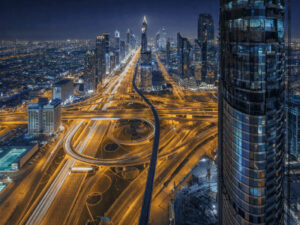
The findings, based on an analysis of millions of Yango Ride trips in 2025, prove that intelligent routing delivers tangible quality-of-life improvements at scale, establishing AI-driven mobility as critical infrastructure for modern cities.
Yango’s routing system leverages a sophisticated combination of machine learning models, real-time traffic data, and historical analysis to optimize every journey, processing multiple data streams simultaneously to calculate the most efficient route in milliseconds.
Time saving
“Five million hours saved isn’t a tech metric — it’s proof that AI can solve real urban problems at scale. We are demonstrating that the next generation of city infrastructure will not be built with concrete and steel alone, but with data, algorithms, and intelligence embedded into everyday services,” explained Adeniyi Adebayo, Chief Business Officer, Yango Group.
The research compared AI-optimized routes with static shortest-path navigation that does not account for real-time traffic conditions. The findings revealed measurable time savings within the UAE’s urban environments. In Dubai, AI-powered routing delivered an average time saving of 2.24% per trip, translating into a total annual recovery of 17,373 hours. In Abu Dhabi, users saved an average of 1.8% per trip, equivalent to 17,384 hours returned over the course of a year.
Congestion modelling
The technology processes information about road characteristics, traffic light patterns, turn complexity, and predictive congestion modelling. The system’s self-learning architecture continuously improves accuracy by comparing predicted versus actual travel times, creating an evolving feedback loop that adapts to each city’s unique patterns.
Beyond time savings, intelligent routing contributes to broader urban sustainability goals. By minimizing idle time and optimizing traffic distribution, Yango’s AI technology helps improve fuel efficiency, lower emissions, and decrease localized congestion — core pillars of smart city development, a press statement concluded.