Delivers Airbus Rescue Helicopter to Tanzania
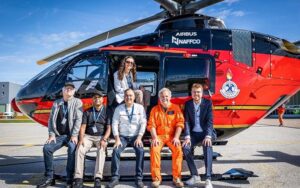
The NAFFCO Group has delivered an Airbus Rescue Helicopter to Tanzania, marking a significant advancement in the nation’s emergency response and public safety infrastructure.
Guided by the vision of Ali Khalid Al Khatib, NAFFCO Group Managing Director, the company continues to advance global safety by delivering innovative rescue and firefighting solutions across land, sea, and air, reinforcing its commitment to protecting lives and supporting communities worldwide.
“At NAFFCO, our commitment to safety in Tanzania includes providing fire trucks for land, rescue boats for sea, and the NAFFCO Airbus Rescue Helicopter for air. Through our strong partnership with Airbus Helicopters, we continue to deliver advanced rescue and firefighting solutions that enhance emergency response capabilities. This collaboration reflects our shared dedication to innovation, reliability, and protecting lives through world-class safety technologies,” explained Al Khatib.
Milestone
The successful handover marks a milestone in NAFFCO’s international growth and commitment to providing governments with advanced, mission-ready solutions for critical operations. It reflects ongoing collaboration with Airbus Helicopters to enhance global emergency service capabilities through innovation and reliable technology.
This delivery introduces the Airbus Rescue Helicopter to the United Republic of Tanzania. Designed for versatility, efficiency, and high-pressure operations, the helicopter strengthens Tanzania’s Search and Rescue (SAR), Emergency Medical Services (EMS), and disaster management readiness.
Operational flexibility
Regarded as one of the most efficient light twin-engine helicopters globally, it offers operational flexibility, fuel efficiency, and reduced maintenance, performing reliably in demanding environments. The configuration delivered to Tanzania is optimized for superior performance, precision, and dependability across various missions.
This delivery demonstrates NAFFCO Group’s commitment to integrated safety solutions and building resilient emergency infrastructure, a press statement concluded.