Road transport remains central to logistics across the region
While infrastructure investment across the region remains important, logistics performance increasingly depends on a more immediate operational reality: keeping trucks available, productive and efficient every day.
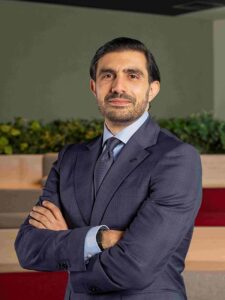
The question, therefore, is no longer simply how many trucks can be added to the road. It is how reliably each vehicle can operate, how quickly it can be supported when required, and how effectively fleets can be managed across increasingly demanding routes, affirms Ramez Hamdan, Managing Director, Al-Futtaim Industrial Equipment.
Across the GCC, logistics networks are under increasing pressure. Trade volumes are rising, cargo flows between ports and inland destinations are accelerating, and supply chains are being tested in real time.
Road transport remains central to logistics across the region, particularly along the corridors linking the UAE, Saudi Arabia and Oman. From FMCG and retail distribution to containerised cargo, long-haul trucking continues to underpin the movement of goods between ports, warehouses and final destinations. Since 2022, this segment has continued to expand as regional trade activity and cross-border movement have increased.
In parallel, increased port activity has raised the demand for reliable inland transport. Cargo movement is no longer concentrated only around traditional hubs; newer and developing ports are creating additional routes, tighter turnaround expectations and greater operational complexity for transport operators.
Operational resilience
In this environment, uptime has become one of the clearest measures of operational resilience. For a logistics operator running a national or regional supply chain, an unexpected breakdown is not merely an inconvenience. It can become a service failure. A single vehicle taken off the road can affect delivery schedules, disrupt cargo movement, increase operating costs and create ripple effects across the wider supply chain.
This is why vehicle reliability, aftersales capability and proactive fleet management now sit at the center of logistics performance.
At Al-Futtaim Industrial Equipment, our role extends beyond supplying trucks to the market. We support customers across the full operational lifecycle of their fleets, with a focus on keeping vehicles on the road, minimising downtime and maintaining continuity even in demanding operating conditions.
Vehicle performance
For fleet operators, reliability is no longer judged by vehicle performance alone. It is judged by the strength of the aftersales network behind the vehicle, the speed of service response, the availability of spare parts and the ability to identify issues before they become operational disruptions. This is especially important for logistics operators managing time-sensitive supply chains, where even short periods of downtime can have a direct commercial impact.
This has accelerated the shift from reactive maintenance to proactive fleet management. Connected vehicle technologies, telematics systems and dedicated uptime centres are giving operators greater visibility over vehicle performance, maintenance schedules and potential technical issues in real time.
Predictive diagnostics
Predictive diagnostics and remote monitoring can help operators act earlier, plan maintenance more effectively and reduce unplanned downtime across the fleet.
Customer expectations are evolving at the same pace. Operators increasingly expect faster vehicle availability, shorter service intervals, quicker turnaround times and consistently high uptime.
Driver safety and comfort are also becoming central to fleet productivity, particularly in long-haul operations where fatigue management, retention and vehicle utilisation are closely linked.
Collision warning systems, driver fatigue monitoring, blind-spot detection and improved cabin ergonomics are increasingly viewed as core operational requirements rather than optional features.
Integrated telematics
Volvo Trucks continues to play a key role in heavy-duty and long-haul operations where safety, uptime, fuel efficiency and driver comfort are critical to performance. Integrated telematics and fleet monitoring systems help operators improve visibility, manage performance and make better decisions across large-scale operations.
In Saudi Arabia, Dongfeng trucks are supporting growing demand for scalable, cost-efficient transport solutions, particularly in high-volume applications where reliability and total operating value remain key priorities.
The UAE is also seeing growing interest in alternative powertrains and electric commercial vehicles. While adoption across the wider GCC market is still developing, the UAE continues to lead regional progress in practical deployments. Recent Volvo electric truck deployments with companies including Unilever and DHL, alongside the introduction of a BYD electric truck within Al-Futtaim Logistics operations, show how electrification is beginning to move from concept to commercial application.
The future of logistics in the GCC will not be defined by fleet size alone. It will be shaped by reliability, operational visibility, aftersales expertise and the ability to keep vehicles operating safely and efficiently under increasing demand.
In a region where supply chains are expected to move continuously and without interruption, keeping trucks on the road is no longer just an operational target. It is a strategic requirement for logistics resilience.
Profile:
Ramez Hamdan boasts an illustrious track record spanning more than 18 years, he consistently exhibits an unwavering dedication to excellence, innovation, and the fulfillment of customer expectations.
Endowed with a profound understanding of the intricacies inherent to industrial equipment dynamics, Ramez consistently situates Industrial Equipment at the forefront of the market, adeptly seizing emerging opportunities and pioneering novel strategies.
Through the cultivation of talent and the championing of innovative thinking, he has crafted a dynamic workforce that consistently surpasses expectations, steering the division toward unprecedented growth.