Australian agri-tech firm núaFEEDs advances circular agriculture model
Repeated disruptions to global food supply chains, from geopolitical tensions and shipping delays to the COVID-19 pandemic and extreme weather events, are prompting renewed focus on domestic food resilience across the Gulf.
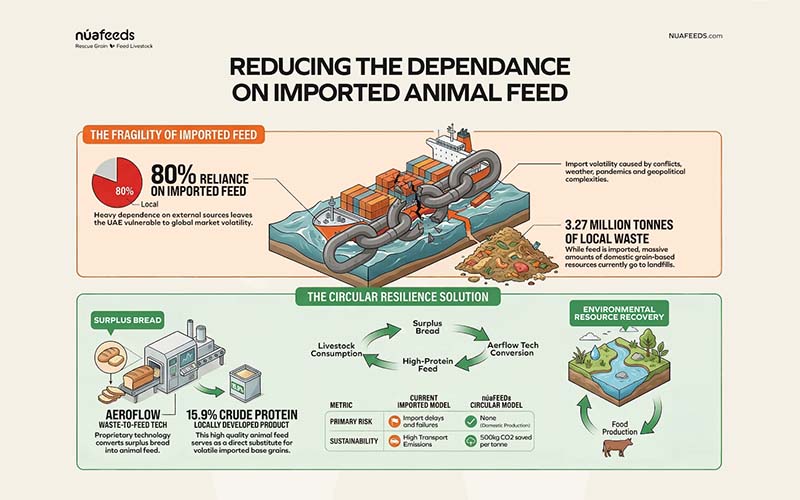
The UAE imports nearly 90 percent of its food supply, while generating an estimated 3.27mn tonnes of food waste annually, highlighting both the vulnerability of supply chains and the scale of untapped resources within the country’s food system.
Australian agri-tech company núaFEEDs is advancing a circular agriculture innovation in the UAE that would convert surplus bread from bakeries and retailers into livestock feed sourced locally in the Emirates. The model is designed to give surplus grain-based products a second life within the agricultural system while reducing reliance on imported feed used by dairy and livestock producers.
AEROFLOW technology
Using its proprietary, UAE-owned IP, AEROFLOW technology, núaFEEDs converts grain-based products into a high-value nutrition livestock feed ingredient with 99.7 percent purity and 15.9 percent crude protein, offering a potential substitute for some imported base grains used in livestock diets.
“Recent years have shown how vulnerable global food supply chains can be. Turning surplus food into a valuable local resource can help strengthen supply resilience while supporting the UAE’s long term food security vision,” asserted Chava Berrill, CEO, núaFEEDs.
Circular economy
The model aligns with the UAE National Food Security Strategy 2051 and the Circular Economy Policy 2021 to 2031, which encourage technologies that reduce food waste and strengthen domestic production systems.
Each tonne of bread diverted from landfill can prevent more than 500 kilograms of carbon dioxide equivalent emissions while recovering approximately 13cbm of water embedded in grain production.
núaFEEDs is currently finalising its first UAE processing facility and building supply partnerships with bakeries, retailers, and livestock producers to create a circular feed system within the Emirates. The company is also engaging UAE based partners as it develops the project, reflecting growing interest in scalable technologies that contribute to national food security and sustainability goals.