Delegates gather at Arqaam Capital’s 13th Annual MENA Investor Conference
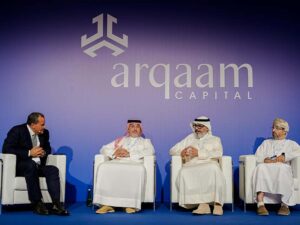
The Middle East and North Africa is entering a new phase of capital market growth, supported by rising foreign investment, expanding debt and equity markets and increasingly diversified economies, according to investors, policymakers and business leaders gathered at Arqaam Capital’s 13th Annual MENA Investor Conference.
Held under the theme ‘From Resilience to Market Leadership: Scaling Capital Across MENA’, the conference convened some of the region’s most influential voices across finance, investment and capital markets, including HE Sheikh Nahyan bin Mubarak Al Nahyan, UAE Minister of Tolerance and Coexistence, alongside senior leaders from regional exchanges, financial institutions, sovereign investors and listed companies.
Across two days, participants examined the forces reshaping the region’s investment landscape, spanning capital markets, fixed income, venture capital, entrepreneurship, real estate, artificial intelligence, quantitative investing and index strategies.
Diversification
Strength and diversification of the GCC economy emerged as a central theme. Discussing the UAE’s outlook, Simon Ballard, Managing Director and Chief Economist at First Abu Dhabi Bank, noted that approximately 76% of UAE GDP is now generated by non-oil sectors, reflecting the success of the country’s long-term diversification strategy.
Speakers also highlighted that GCC foreign direct investment inflows reached an estimated US$ 300bn between 2019 and 2024, with the UAE accounting for more than half of the total, underpinned by its fiscal strength, business-friendly regulation and ability to attract both capital and talent.
The evolution of regional capital markets featured prominently. In a fireside discussion, Hamed Ali, Chief Executive Officer of Dubai Financial Market and Nasdaq Dubai, pointed to DFM’s continued growth, with market capitalisation approaching AED 1tn and average daily trading value surpassing AED 1bn for the first time.
Deepen liquidity
Regional exchange leaders also outlined initiatives to deepen liquidity, broaden participation and expand access, through market reforms, debt-market development, exchange-traded funds, securities-lending frameworks and enhanced infrastructure.
In Oman, institutional investors now represent around 75% of market participation, while trading volumes exceeded OMR 6bn in the first five months of 2026, already surpassing the OMR 5bn recorded across the whole of 2025.
Fixed income was a further focus, with investors examining an estimated US$ 508bn of GCC debt maturities expected over 2026–2030. Arqaam Capital’s Omar Musharraf, Fady Gendy and Jad Raouda joined regional participants in discussing the opportunities this refinancing cycle presents for issuers and investors as regional debt markets mature.
Strategic allocation
Several speakers noted that GCC fixed income is increasingly viewed as a strategic allocation within global portfolios, supported by resilient sovereign balance sheets, strong corporate fundamentals and a widening universe of issuers.
Beyond traditional asset classes, discussions turned to how artificial intelligence, private capital, entrepreneurship, quantitative investing and demographic shifts are creating new opportunities across MENA.
Sessions with venture capital investors and founders explored the evolving funding landscape for regional startups, while others examined the growing role of quantitative strategies and index investing in shaping institutional flows.
Key beneficiary
Dubai’s real estate sector was highlighted as a key beneficiary of these trends. Speaking in the session ‘Rebuilding the Regional Real Estate Thesis’, Aliaa Elesaaki, Senior Research Manager at Knight Frank, noted that Dubai recorded approximately 58,000 property transactions worth AED 176bn by the end of April 2026, with off-plan sales accounting for 73% of activity and cash buyers continuing to dominate.
We continue to see opportunities for high-quality issuers and remain confident that GCC real estate will continue to attract investor interest as market conditions stabilize,” assured Jaap Meijer, Partner and Head of Research, Arqaam Capital.
“This year’s conference reflected growing confidence in the region’s long-term trajectory. As economies diversify, capital markets deepen and opportunities broaden, MENA continues to strengthen its position in global investment conversations,” concluded Riad Meliti, Chief Executive Officer, Arqaam Capital.