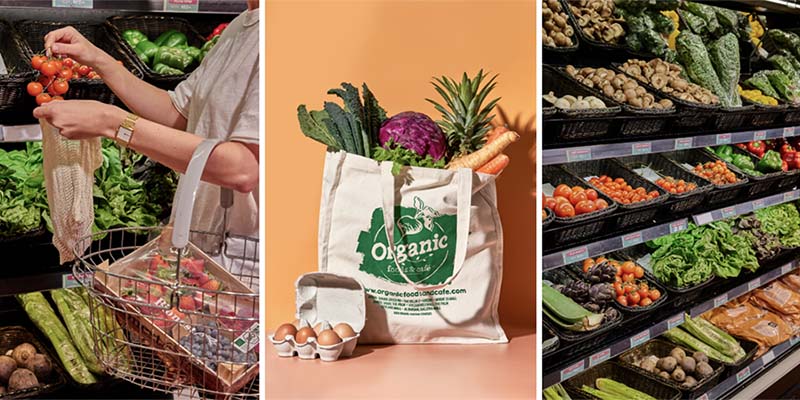
Local producers struggled to meet the benchmarks that major buyers required
The most consequential changes in business rarely announce themselves. They accumulate quietly in procurement decisions, in vendor reviews, and in sourcing conversations held far from the shop floor. What is happening inside UAE retail supply chains now is exactly that kind of change, affirms Firas Nasir, CEO, Organic Foods & Café and Co-CIO, The Gulf Japan Food Fund.
In the past, retailers across the board built their vendor lists around established global suppliers who could deliver volume, compliance maturity, and operational consistency on a scale.
Local producers, by contrast, sometimes struggled to meet the benchmarks that major buyers required: reliable cold chain infrastructure, internationally recognised food safety certification, and the capacity to scale supply without compromising on delivery windows.
That gap has narrowed considerably, and the timing matters. Investment in UAE logistics infrastructure, including temperature-controlled warehousing, last-mile refrigerated delivery, and the development of alternative trade corridors, such as the Oman-UAE Green Corridor and the east coast ports of Khorfakkan and Fujairah, has given domestic suppliers a credible and sustainable path to retail shelves that simply did not exist half a decade ago.
Domestic sourcing
The impact is most visible at retailers who made early commitments to domestic sourcing. For instance, Organic Foods and Cafe, which works with over 400 vendor partners across local and global supply chains, has tracked the evolution closely. Over the past four years, the composition of its vendor list has shifted meaningfully, with a clear move toward sourcing from closer geographies.
This has improved product availability, reduced transit times, and meaningfully lowered the carbon footprint across key categories. The transitions have been most pronounced in beverages, fresh produce, and dairy categories where domestic producers have invested seriously in quality and consistency.
The products now earning space on shelves reflect genuine operational maturity, not simply a preference for local origin. Organic eggs from Risha Farms in Fujairah and fresh organic milk from Organiliciouz in Sharjah, both now stocked consistently, represent a generation of domestic suppliers that would not have met major retailer requirements a few years ago.
Homegrown brands
Alongside them, homegrown brands, including ME Kombucha, Pure Harvest, Humantra, Nothing Silly, and Shake Your Plants, are finding sustained footing in channels that once defaulted to international names as a matter of course.
The broader retail sector is also responding. ‘The Make it in the Emirates’ initiative, a government-led effort to boost domestic manufacturing and industrial investment initiative, has added meaningful policy weight to what was already becoming commercial common sense, with approved vendor lists across the industry being reviewed through a lens of supply chain resilience rather than simple cost optimisation.
That recalibration has been sharpened further by recent events. Retailers who have already embedded local sourcing into their models have proved markedly better positioned to absorb the shock. Alternative freight channels were activated where necessary, but the businesses least exposed were those that had built domestic supplier relationships before disruption made it urgent.
Persistent gap
Of course, challenges still remain. The shortage of organically certified local producers is a persistent gap, and the expectation from retailers has not softened, with domestic suppliers held to the same delivery, safety, and scalability standards as their international counterparts.
The pipeline of producers meeting that bar is growing, and the commercial argument has become difficult to dismiss. Faster turnaround, extended shelf life on domestic fresh goods, and meaningful resilience against freight volatility now outweigh the scale advantages that international suppliers once held unchallenged.
The restructuring of UAE retail around homegrown brands was already underway but the current geopolitical situation has expedited it to a new level. It is now driven by hard commercial experience, enabled by maturing infrastructure, and supported by national policy. The businesses that recognise it for what it is, a fundamental supply chain shift, not a sourcing trend – will be the ones who shape what UAE retail looks like in the decade ahead.
Boilerplate:
Organic Foods & Café is the UAE’s original destination for 100% certified organic, fresh, and natural products. Proudly homegrown since 2004, the brand operates a chain of seven organic supermarkets and cafés in Dubai and Abu Dhabi, offering a curated selection of groceries, fresh produce, meat, dairy, bakery items, natural supplements and health & beauty products, all free from chemicals, pesticides, and GMOs (Genetically Modified Organisms).