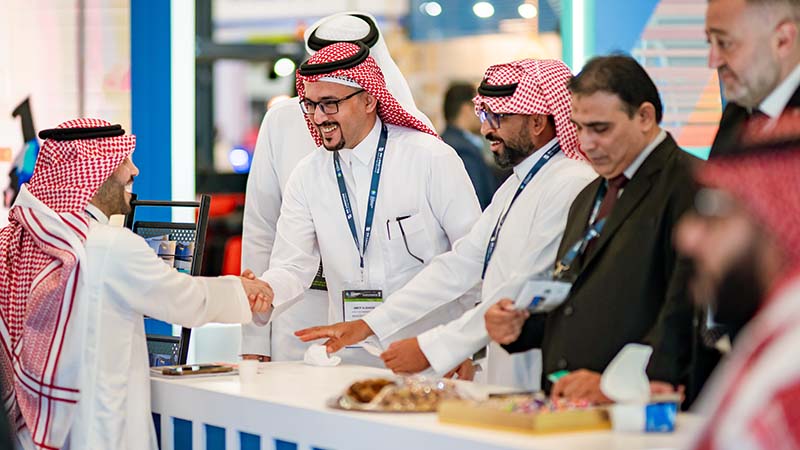
Under the patronage of HE The Minister of Transport & Logistic Services, Eng. Saleh bin Nasser Al-Jasser, the 3rd edition of Saudi Warehousing & Logistics Expo will take place from 8 – 10 September 2026 at the Riyadh International Convention & Exhibition Center, bringing together industry leaders as Saudi Arabia continues to strengthen its position as a regional logistics hub, in line with the objectives of the National Transport and Logistics Strategy and Saudi Vision 2030.
Building on the success of last year’s edition, the event will bring together government entities, suppliers and decision-makers from across the logistics, warehousing and supply chain sectors to explore the solutions, partnerships and technologies, supporting the Kingdom’s expanding logistics ecosystem.
The exhibition comes at a time when Saudi Arabia is playing an increasingly pivotal role in connecting global supply chains and ensuring the resilience of logistics corridors, particularly amid regional volatility and geopolitical tensions that have impacted transportation and shipping networks.
Strategic initiatives
Through the launch of a range of strategic initiatives and logistics corridors, as well as the provision of support measures for partners during the current crisis, Saudi Arabia has reinforced logistics integration with GCC countries and regional markets, strengthened supply chain continuity and resilience and further underscored the strategic significance of its geographic location as a vital gateway for regional and global trade and transportation.
The event comes amid sustained investment in Saudi Arabia’s transport and logistics sector, in line with the National Transport and Logistics Strategy. At the same time, the rapid expansion of e-commerce is transforming supply chain requirements across the Kingdom, creating growing demand for faster, smarter and more efficient fulfillment and delivery solutions.
Saudi Arabia’s e-commerce logistics market is projected to double in size by 2027, reflecting the sector’s accelerating momentum and the increasing adoption of digital commerce. Supporting this growth, the Kingdom has made significant progress in expanding its logistics infrastructure, with 25 logistics hubs already operational out of a planned network of 42 hubs to be developed nationwide in partnership with the private sector.

Investments and digitalization
“Saudi Arabia’s logistics sector is continuously evolving as investment, digitalization and changing customer expectations refine supply chain demands across the Kingdom. Businesses are looking for practical solutions that improve efficiency, strengthen resilience and support long-term growth,” stated Muhammed Kazi, Senior Vice President, dmg events, the event organizer.
Throughout the three high-impact days, the exhibition will showcase solutions spanning cargo handling, cold chain, cross-docking and transloading, freight forwarding, multimodal transport, ports and terminal services, last-mile delivery, order fulfilment and third-party logistics.
Visitors will have the opportunity to connect with suppliers, discover new products and services and explore solutions designed to improve operational performance across the supply chain. The exhibitor line-up includes SAL Logistics, MS Logistics, Al Dress, Swisslog, SSI Schafer, JAL, Ajlan, Kardex and Sadr Logistics, among others.
Policymakers and professionals
Alongside the exhibition, the Kingdom will host the Saudi Warehousing & Logistics Summit, an accredited Continuing Professional Development (CPD) programme that brings together leading policymakers, industry leaders and supply chain professionals to discuss the key priorities shaping the future of Saudi Arabia’s logistics sector.
The summit will showcase the policies, technologies and investment opportunities driving greater supply chain efficiency, enhanced logistics connectivity and improved operational performance across the sector.
Its agenda will address a range of critical topics shaping the future of logistics, including artificial intelligence and advanced automation, supply chain resilience, investment in logistics transformation, cross-sector collaboration, Environmental, Social and Governance (ESG) standards, a press statement concluded.