AI stimulus seen as catalyst for business growth in the Kingdom
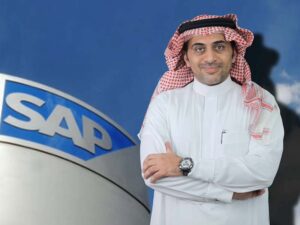
SAP will host its annual SAP NOW AI Tour 2025 at ‘The Arena Riyadh’ on November 3, bringing together business leaders, technology experts, and public sector stakeholders to explore how artificial intelligence (AI) can accelerate Saudi Arabia’s economic transformation.
As the Kingdom advances its Vision 2030 agenda and National Strategy for Data & AI, the event will focus on practical pathways for organizations to harness AI to drive competitiveness, growth, and scalability.
A new YouGov survey of senior IT decision-makers commissioned by SAP reveals strong confidence in the Kingdom’s AI outlook. Seventy percent of Saudi enterprises said AI is very important to shaping their future strategy, while nearly all (97%) expressed confidence in using AI-driven insights for critical business decisions.
The event follows fast on the heels of SAP’s announcement that Saudi Arabia will become the first country to host the full SAP Business Network for the public sector, ensuring data stays in-country while connecting government buyers with global suppliers.
The platform, which facilitates more than US$ 6.1tn in trade each year, is hosted on Google Cloud and will be extended to the private sector in early 2026.
Around 1,000 business executives are expected to attend the SAP NOW AI Tour, which has Google as the Platinum sponsor. The agenda will span multiple sectors, with highlights including how AI can support sustainability, manufacturing, human resources, and procurement.
In the run up to and against the backdrop of the much-anticipated SAP Now AI Tour megaevent, LogisticsGulf.com interviewed Dr. Fahd Nawwab, Vice President, SAP KSA, for an exclusive and wide-ranging interview and the lowdown on the (SAP NOW) day-long occasion, the global technology titan’s intensive forays and growth strategy, its investments. accomplishments, opportunities and fast-paced developments that contribute to the company’s exponential growth in the Kingdom.
The following are the transcripts of the interview:
LogisticsGulf.com (LG): What sets SAP apart vis-à-vis its peers and competitors in the Kingdom?
Dr. Fahd Nawwab (FN): SAP stands apart in Saudi Arabia thanks to our ability to combine global innovation with local relevance. Our early investment in our own data centers in the Kingdom in 2018 enabled us to support Saudi customers on their digital transformation journeys while securely hosting their data locally.
Another key strength is our strong industry focus, particularly in sectors central to the Kingdom’s economy, such as energy and natural resources, manufacturing, and the public sector.
The Kingdom is also the site of the SAP Experience & Innovation Center, which opened in Al Khobar last year and where we can work on innovative AI use cases with customers and partners.
SAP is also unique in the AI race in two aspects.
We provide industry-focused, relevant, reliable and responsible AI that is embedded within the organization’s rich business applications. Secondly, we give a special focus to data harmonization using Business Data Cloud, ensuring a solid data foundation.
SAP is also committed to supporting the development of a sustainable digital workforce among
young Saudi talent in the Kingdom. We address this through training initiatives such as the SAP Dual Study Program, the SAP Academy for Engineering, and the SAP Young Professionals Program.
This combination of local commitment, industry expertise, compliance, and innovation is unique to SAP.
LG: How significant is the Kingdom for SAP in terms of business and growth potential?
FN: Saudi Arabia is one of SAP’s most strategic markets worldwide, which is reflected in our continued investment in the Kingdom. The pace and scale of transformation under Vision 2030 are unmatched, creating opportunities to reimagine entire industries.
SAP was the first to invest in operating a data center in Saudi Arabia and just this October, we announced our planned expansion of the SAP Business Network in Saudi this year, making it the first country in the world to host this complete solution for the public sector with full data sovereignty compliance.
Initiatives such as these underscore the Kingdom’s importance not only as a growth market, but as a global showcase for cloud innovation. The Saudi software market itself is expected to grow from US$ 10bn in 2024 to US$ 22.7bn by 2030, at a CAGR of 14.4%, which is one of the fastest growth rates worldwide.
LG: Aside from the SAP Business Network expansion, what do you have planned for the rest of 2025?
FN: One of the key highlights on our calendar is the SAP NOW AI Tour Riyadh, taking place on November 3 at The Arena. This one-day event will bring together more than 800 business and technology leaders to explore how AI is reshaping industries and driving new levels of efficiency and innovation.
The Riyadh edition is designed as a flagship, SAP Sapphire-like experience for the region – an immersive showcase of our cross-industry vision, real-world AI success stories, and the latest advancements across data, cloud, and business applications.
The agenda features sessions led by SAP’s top executives, including Augusta Spinelli, President, EMEA; Ahmed AlFaifi, Senior Vice President and Managing Director, Middle East and Africa (North); Jasper Schleimann, Head of Business AI, EMEA; and Andreas Krause, Chief Customer Advisory Officer, SAP BTP, BDC, and AI, EMEA.
Through keynote discussions, customer panels, and interactive showcases, SAP NOW Riyadh will spotlight how organizations across the Kingdom are adopting AI and cloud technologies to accelerate growth and support national priorities.
The event also provides a platform for collaboration by connecting customers, partners, and innovators to exchange strategies and ideas that can shape the next phase of business transformation in the country.
LG: How important are the Logistics & Supply Chain industry verticals and associated sectors (such as Transport and Warehousing) for SAP Saudi Arabia?
FN: Logistics and supply chain are critical to Saudi Arabia’s diversification agenda and to SAP’s strategy in the Kingdom. These sectors underpin industries such as manufacturing, energy, and retail.
SAP solutions like S/4HANA, SAP Ariba and SAP Business Network for Logistics enable organizations to run resilient, transparent, and efficient operations.
LG: What are the most promising opportunities for SAP Saudi Arabia in the coming years, and how do you plan to build on recent milestones to drive growth?
FN: The most promising opportunities lie in digitalizing industries that define the Kingdom’s economic future, from energy and manufacturing to logistics and the public sector. SAP is driving growth by helping organizations to accelerate AI adoption; strength the foundation of AI with data harmonization; embed sustainability; and build resilient supply chains.
Industry events and thought leadership forums are vital to this journey, and our upcoming SAP NOW Riyadh in November will be a major platform to showcase these innovations and deepen collaboration with customers and partners.
LG: How are new and emerging technologies changing the industry landscape, and what steps is SAP Saudi Arabia taking to deliver innovative, locally relevant solutions that also connect to global markets?
FN: AI and data federation are reshaping industries across the Kingdom. SAP is delivering locally hosted solutions, such as SAP Business Network in Saudi Arabia, which allow regulated industries to benefit from a global network while ensuring compliance with national data policies. AI is another key driver, with early applications already transforming logistics, energy forecasting, and citizen services across different industries, making them competitive and relevant, and supporting their expansion plans with innovation.
Recent SAP research shows that 75% of Saudi enterprises already run core business functions in the cloud, and 64% express high confidence in their data quality, underlining the Kingdom’s readiness to scale advanced AI and cloud solutions.
LG: Given the criticality and omnipresence of AI today, how is SAP advancing AI adoption across its solutions?
FN: AI is at the heart of SAP’s strategy. Joule is being embedded across our portfolio, from supply chain and logistics optimization to HR and finance, helping organizations move from reactive decision-making to predictive.
At the SAP Connect event held in Las Vegas this October, we announced new agentic AI capabilities within SAP Business Suite, uniting AI, data, and applications to enable more autonomous business processes and context-aware decision-making.
In Saudi Arabia, this innovation is supported by localized infrastructure and sovereign cloud deployments, ensuring AI adoption is both secure and compliant with national priorities.
LG: How important are your partners in the Kingdom, and how would you characterize your relationship with them?
FN: Partners are central to SAP’s overall strategy and success in Saudi Arabia. From global system integrators to local champions, our ecosystem extends innovation and ensures that SAP solutions are tailored to Saudi business and regulatory requirements.
Whether in manufacturing, public sector, or energy, these partnerships allow us to deliver end-to-end digital transformation aligned with Vision 2030. Together with partners, we are building a sustainable, competitive, and tech-driven economy.
LG: How do SAP’s technology strategies and growth plans align with Saudi Vision 2030, especially in reducing reliance on oil and fostering a vibrant, tech-driven economy?
FN: SAP’s growth strategy in Saudi Arabia is built to advance Vision 2030’s diversification agenda through four concrete levers: sovereign cloud, embedded AI, skills and ecosystem building, and sustainability at scale.
Riyadh is the site of our regional headquarters and SAP is constantly expanding in-country cloud options for regulated entities. These options include the availability of SAP Business Technology Platform on Google Cloud in KSA, and new developments on SAP Business Network to be rolled out before the end of this year.
Second, SAP is operationalizing Business AI in Saudi organizations beyond oil. Recent deployments include Red Sea Global’s rollout of Joule in HR, with plans to extend AI across ERP and procurement; Almarai’s implementation of RISE with SAP on Google Cloud to support a SAR 18bn expansion plan; Herfy’s move to RISE with SAP hosted in local Google Cloud Data Centers; and Riyadh Airports Company’s upgrade of procurement with SAP Ariba.
These illustrate impact in Tourism, Food & Beverage, including quick service restaurants, and Aviation. Third, as already mentioned, SAP has invested in Saudi talent and co-innovation including the Khobar center and Academy of Engineering, and ongoing Young Professionals Program intakes.
LG: With the deployment of the SAP Sustainability Control Tower at SIRC (a PIF subsidiary), SAP demonstrated a first-of-its-kind implementation in the Kingdom. What further progress has been made on the sustainability solutions front?
FN: The deployment at SIRC was a landmark for embedding sustainability into business operations. Since then, we’ve seen growing adoption across industries such as utilities, logistics, and manufacturing.
Saudi organizations are increasingly focused on aligning ESG goals with Vision 2030’s environmental pillars, and SAP solutions like the Sustainability Control Tower make this measurable and actionable — from carbon tracking to circular economy practices.
LG: How is the partnership between the Kingdom’s Digital Government Authority and SAP Saudi Arabia for Software Services, signed in December 2022, progressing? What are its long-term implications?
FN: The partnership with the Digital Government Authority is progressing strongly. Together we are building the foundation for secure, scalable, and citizen-focused government services powered by SAP’s cloud solutions.
This collaboration supports sovereign data requirements while enabling digital services that are globally benchmarked. In the long term, it will help ensure Saudi Arabia remains a leader in digital government innovation.
LG: What is your wider vision for SAP Saudi Arabia in the short and long term, and how will new initiatives help position the Kingdom as a leader in digital transformation and global collaboration?
FN: Our vision is to maintain SAP as a cornerstone of the success of Saudi Arabia’s digital economy. In the near term, we are focused on scaling up AI adoption and preparing for the launch of SAP Business Network in Q4 2025, which will strengthen procurement and supply chain ecosystems.
Longer term, we are committed to continuing to develop local talent, advance sustainability, and foster innovation across priority industries. This will support Saudi Arabia’s role as a global leader in digital transformation. We encourage all business leaders to see this vision brought to life at events like November’s SAP NOW in Riyadh.