The newly constructed railway system connects 11 cities and regions across the country
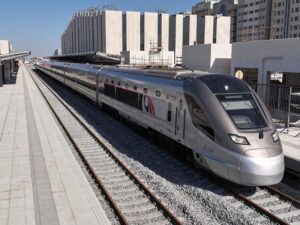
The passenger rail network will connect 11 cities and regions through strategically located stations, forming the UAE’s first fully integrated national passenger railway system. The network will strengthen connectivity across the Emirates and provide safe and reliable mobility services for citizens, residents and visitors alike.
Planned stations
In early 2025, Etihad Rail announced the first four stations in Abu Dhabi, Dubai, Sharjah and Fujairah. Now Etihad Rail announced the remaining planned stations in Al Sila’, Al Dhannah, Al Mirfa, Madinat Zayed, Mezaira’a, Al Faya and Al Dhaid, which will become operational in phases.
“The passenger rail network will serve as a cornerstone of the UAE’s national transport ecosystem, supporting the country’s long-term development and strengthening connectivity across its Emirates. It also builds on our proven success since 2023 in operating the national freight rail service,” asserted Azza AlSuwaidi, Deputy CEO, Etihad
Rail Mobility
The trains have been designed to offer a comfortable and modern travel experience, featuring safe and ergonomic seating, contemporary interior designs, full Wi-Fi coverage, and individual power outlets at every seat.
Services will operate on a precise and regular schedule, providing passengers with a reliable and efficient alternative that ensures smooth and speedy travel between cities, free from road congestion.
Reliable alternative
“Our trains have been designed to offer a reliable, congestion-free alternative for intercity travel, with a focus on reducing journey times. Ten of the 13 trains in our fleet have arrived, where they have been tested and certified to the highest international safety and quality standards,” explained Eng. Mohammed Alshehii, Chief Projects Officer, Etihad Rail.
“Each train can accommodate up to 400 passengers and will be operated using the latest systems to ensure reliability and security. Our services will be seamlessly integrated into the wider transport network, with stations connected to other modes of transport,” concluded Engr. Alshehii.