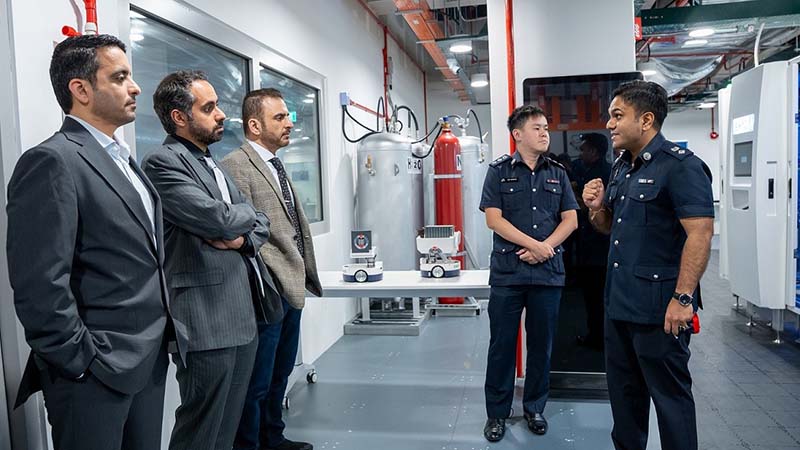
As part of its 2026–2030 strategy, Dubai Customs has continued to invest in developing its executive leaders through a review of the key themes and outcomes of the Strategic Trade Futures Leadership Programme, supporting knowledge transfer and the application of institutional best practices.
The programme was held from 29 June to 3 July 2026 in collaboration with NUS Business School at the National University of Singapore, Asia’s top-ranked business school. It aimed to strengthen leadership readiness for global shifts and reinforce Dubai Customs’ leadership in developing a future-ready customs ecosystem that supports Dubai’s competitiveness and its position as a global hub for trade and logistics.
The programme is part of Dubai Customs’ drive to develop mid-level and emerging leaders by strengthening their global mindset and foresight capabilities, enabling them to identify shifts early and turn them into opportunities for development.
Reshaping the future
The programme focused on key issues reshaping the future of global trade, foremost among them geoeconomic shifts, economic security, technological competition, and the restructuring of global value chains.
It also addressed the role of artificial intelligence and advanced technologies in developing customs operations, strengthening risk management and improving decision-making efficiency, through specialist sessions and workshops delivered by Alex Capri, a global expert on supply chains and international trade.
“Through our 2026–2030 strategy, we continue to develop leaders capable of leading through future shifts, strengthening Dubai’s competitiveness, supporting the objectives of the Dubai Economic Agenda D33, and consolidating the emirate’s position as a global hub for trade and logistics,” assured HE Dr Abdullah Busenad, Director General, Dubai Customs.